
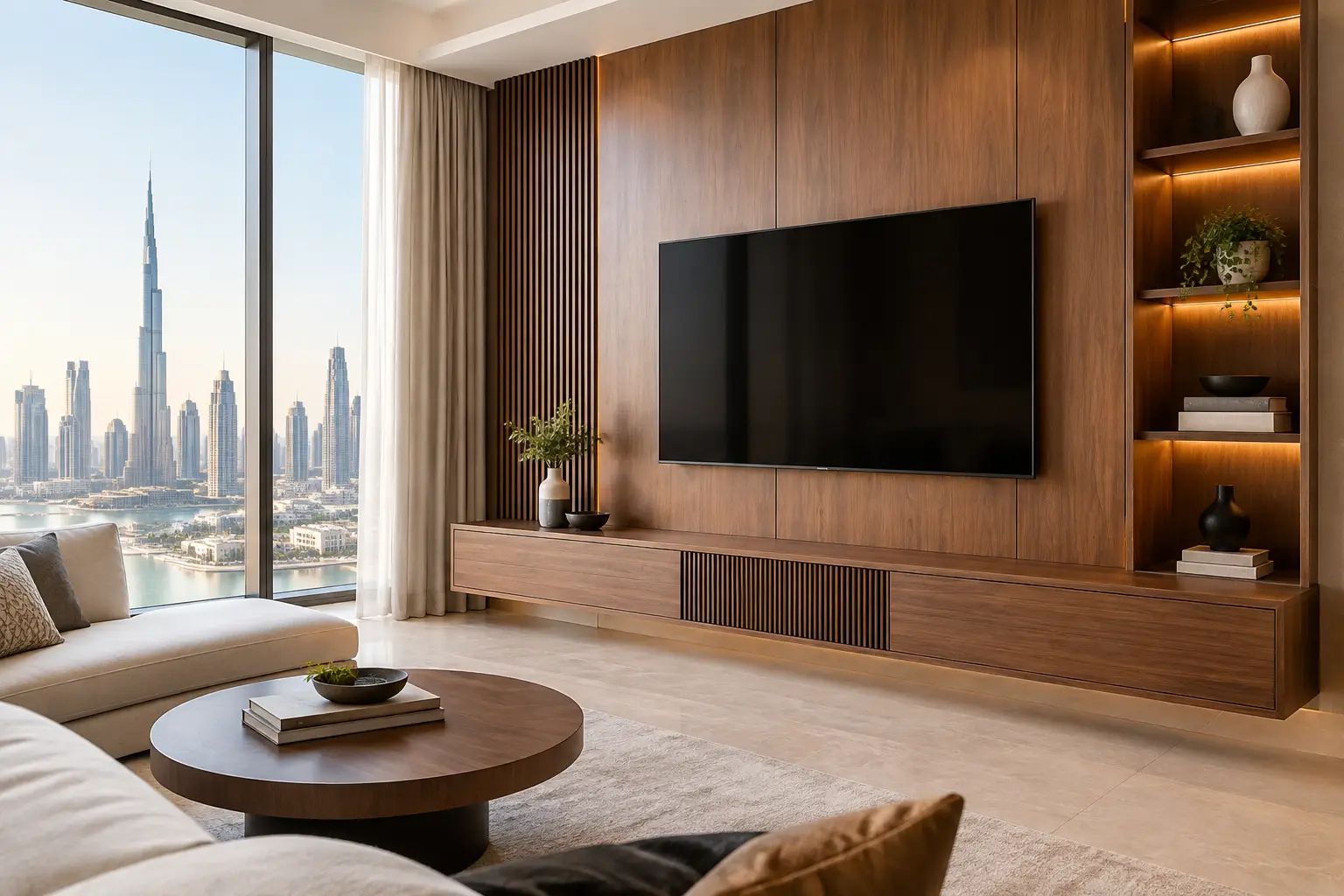
A television can easily become the visual center of a living room, but a loose screen, exposed cables, and mismatched furniture can make an otherwise polished space feel unfinished. A custom wooden tv wall unit turns that practical necessity into a purposeful design feature, combining media storage, display space, concealed wiring, and a material that brings natural warmth to the room.
For Dubai homes, the best result is rarely a standard cabinet placed below the screen. It is a wall composition designed around the room’s proportions, your viewing habits, and the finishes already present in the interior. Whether the goal is a quiet, minimalist backdrop or a full-height feature wall with storage, thoughtful planning makes the difference between a unit that simply holds a TV and one that elevates the entire home.
Why a Wooden TV Wall Unit Changes the Room
Wood is one of the most adaptable materials in residential interiors. It can feel warm and relaxed in a family living room, sleek and architectural in a contemporary apartment, or richly detailed in a villa with a more classic design direction. Unlike a standalone TV console, a fitted wall unit can be scaled precisely to the width and height of the wall, giving the room a more settled and intentional appearance.
Function is equally important. A professionally designed unit can conceal electrical outlets, cable boxes, gaming consoles, routers, speakers, and charging points without making them difficult to access. It can also provide closed cabinets for everyday clutter and open shelving for books, artwork, or carefully selected accessories.
The result is especially valuable in open-plan apartments and villas, where the living area is visible from the dining space, entrance, or kitchen. A well-finished media wall creates order from multiple viewing angles while adding a focal point that supports the overall interior design concept.
Start With the Wall, Not the TV
The television size matters, but it should not dictate every design decision. Before choosing finishes or cabinet layouts, assess the wall itself. Its width, ceiling height, nearby windows, door swings, and relationship to seating all affect the final composition.
A narrow wall may benefit from a clean panel behind the screen and a low floating cabinet. This keeps the design light and avoids making the room feel crowded. A wider wall can carry more visual weight, with vertical timber panels, side storage, display niches, or an integrated fireplace feature where appropriate.
Viewing distance should also be considered early. Mounting the TV too high is one of the most common mistakes in residential media walls. The center of the screen should generally sit close to eye level when seated, adjusted for sofa height and room layout. If the TV must be placed above a fireplace or within a tall feature panel, careful planning is needed to maintain comfortable viewing.
Plan storage around real daily use
Storage should be based on what the household actually needs to keep in the room. Some clients need a discreet home for gaming equipment, remote controls, and children’s items. Others want a sophisticated display wall for books, objects, and framed art. The right balance depends on lifestyle.
Closed cabinets deliver a cleaner visual result and are ideal for items that do not need to be seen. Open shelves create depth and personality but require more editing and regular organization. In many homes, a combination works best: concealed base cabinets for practical storage and a limited number of open niches for display.
Avoid adding shelves simply to fill space. Too many compartments can make a custom wall unit look busy, particularly in compact apartments. A strong design leaves room for the materials and proportions to speak for themselves.
Choosing the Right Wood Finish
The finish determines whether the TV wall feels soft and residential, boldly contemporary, or formal and luxurious. Natural oak tones are popular for their warmth and versatility. They work well with cream upholstery, stone flooring, soft gray walls, and the neutral palettes often preferred in modern Dubai interiors.
Walnut brings more depth and drama. Its darker tone can create a refined look in larger living rooms, executive lounges, and homes with warm metallic accents. Because it has a stronger visual presence, walnut is often most effective when balanced with light walls, pale stone, or integrated lighting.
For a cleaner contemporary effect, matte wood veneer in a controlled grain pattern can be paired with painted panels, fluted detailing, or slim black reveals. Wood-look laminates can also be a sensible choice for projects where durability and budget control are priorities. They offer consistent color and easy maintenance, though natural veneer generally provides greater depth and individuality.
The best material is not always the most expensive one. It depends on the desired appearance, the expected level of use, and how the unit connects to other joinery in the room. A custom piece should relate to the flooring, doors, kitchen finishes, and adjacent furniture rather than compete with them.
Add Lighting With Restraint
Integrated lighting can give a wooden TV wall unit a more refined, premium appearance, but it should support the design rather than dominate it. Warm LED strips within display niches or beneath a floating cabinet can create depth in the evening and make the wall feel more architectural.
Lighting behind the television may reduce the contrast between the bright screen and the surrounding wall, which can be more comfortable during nighttime viewing. However, the light temperature should be warm and controlled. Cool white lighting can make timber finishes look flat and may give the room an overly commercial feel.
Dimmable lighting is a practical upgrade because the room will serve different purposes throughout the day. Bright display lighting may be useful when entertaining, while a soft glow is better for watching a movie or relaxing with family.
Details That Make Custom Joinery Feel Premium
A high-quality media wall is defined by the details visitors may not immediately notice. Cable routes should be planned before installation so no wires are visible around the screen. Ventilation should be provided for enclosed electronics, especially if routers, amplifiers, or gaming consoles are stored inside cabinets.
Door alignment, edge finishing, handle selection, and the spacing between panels all influence the final impression. Push-to-open doors can preserve a minimalist appearance, while integrated finger pulls or slim metal handles may suit a more defined contemporary style. Soft-close hinges and quality drawer hardware also matter because they affect the everyday experience of using the unit.
Electrical access deserves the same attention as aesthetics. Power outlets, data points, and concealed conduits should be located where equipment can be connected and serviced without dismantling the joinery. A beautiful wall that is difficult to maintain will not deliver long-term value.
Consider acoustics and heat
Timber panels can soften the visual hardness of a room, but they are not a complete acoustic solution. If a home cinema experience is important, sound planning should include speaker placement, the room’s soft furnishings, and whether acoustic panels are needed behind or beside the TV area.
Heat is another practical consideration. Televisions and connected devices generate warmth, and enclosed cabinetry can trap it. Ventilation gaps, grilles, and correct equipment spacing help protect devices and preserve performance without disrupting the design.
Make It Part of a Complete Interior Vision
The strongest TV wall units do not look added after the room is finished. They relate to the ceiling design, flooring, curtains, seating layout, and adjacent walls. In an open-plan home, the same timber tone may continue in a dining console, entrance feature, or built-in storage to create visual continuity.
This does not mean every surface should match exactly. A room with too much wood can feel heavy. The more considered approach is to repeat the material selectively, then balance it with stone, textured paint, glass, metal, or upholstered elements. The contrast gives the wooden feature wall a clear role without overwhelming the space.
For rental properties or homes with expected future changes, a simpler modular arrangement may offer more flexibility. For a long-term family residence or a high-value villa, tailored joinery often makes greater sense because it uses the available wall space more effectively and supports a more integrated finish.
Professional Design and Execution Matter
A wooden TV wall unit sits at the meeting point of interior design, electrical planning, carpentry, lighting, and installation. That is why it benefits from a coordinated approach rather than separate decisions made by different contractors. Accurate site measurement, material samples, detailed drawings, and skilled installation are essential to achieving clean lines and reliable functionality.
Al Sahm Decoration Design approaches residential feature walls as part of a complete interior solution, aligning layout, finishes, storage, and technical requirements with each client’s lifestyle and vision. From an understated apartment media wall to a statement installation for a villa, the objective is the same: deliver a space that looks considered and works effortlessly every day.
The most successful media wall is not the one with the most shelves, lighting, or decorative panels. It is the one that makes your living room feel calmer, more organized, and unmistakably yours.


Comments are closed