
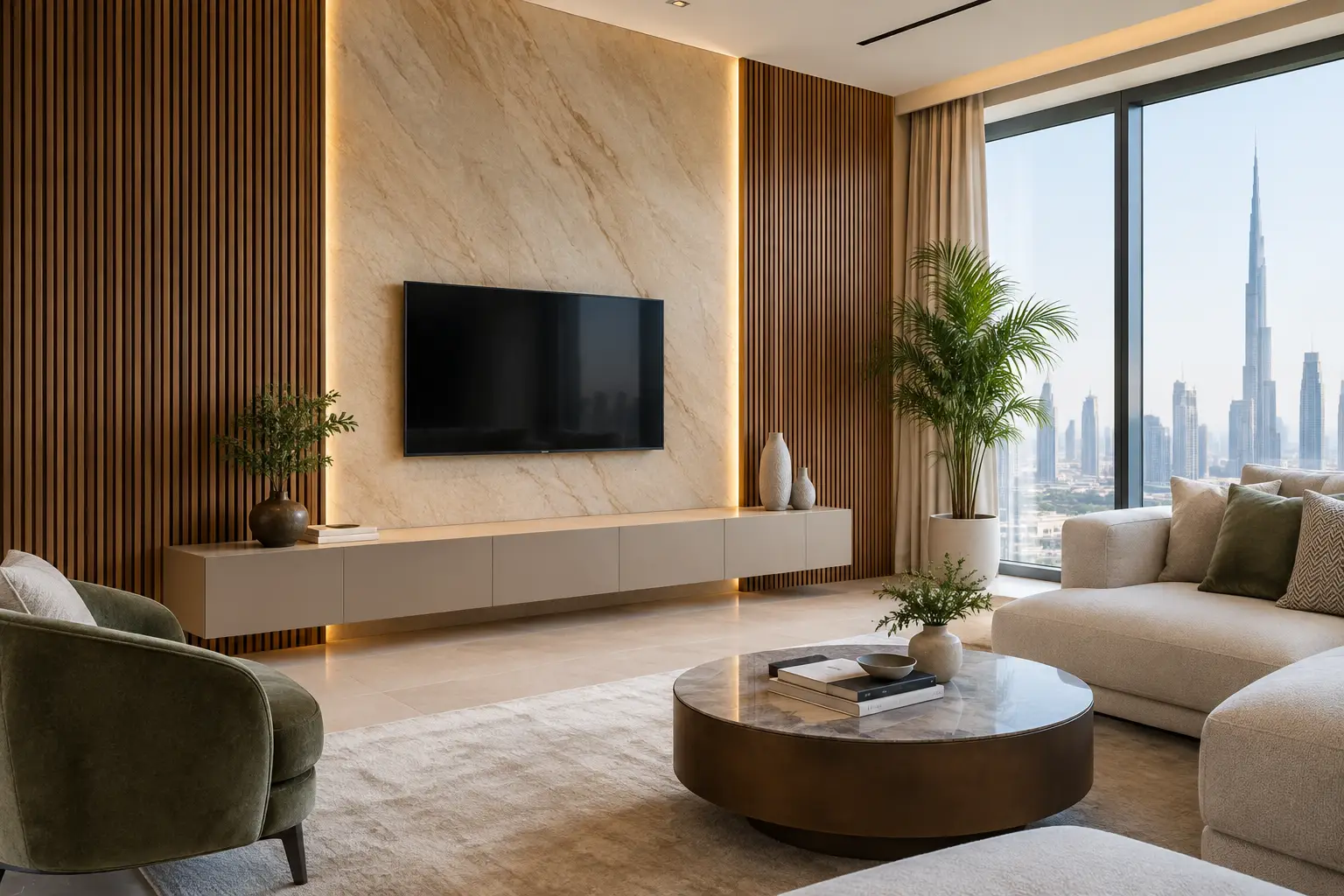
A plain wall can make even a well-planned office, restaurant, retail store, or home feel unfinished. The right wall cladding changes that immediately, introducing texture, depth, warmth, and a stronger sense of identity without compromising the practical needs of the space. For property owners and business decision-makers in the UAE, it is one of the most effective ways to give an interior a premium, purposeful finish.
Wall finishes should never be selected only from a sample board. They must work with the lighting, layout, traffic level, maintenance expectations, and overall design vision of the project. A refined timber-look feature wall may suit an executive office, while large-format stone panels can establish a more dramatic reception area. The best choice is the one that supports both appearance and long-term performance.
Why Wall Cladding Makes a Strong Design Investment
Wall cladding is a decorative or protective surface layer installed over an existing wall. Depending on the material, it can create a contemporary focal point, protect high-contact areas, conceal minor wall imperfections, improve acoustic comfort, or reinforce a brand’s visual language.
In commercial spaces, first impressions carry real business value. A reception wall, meeting room backdrop, restaurant dining area, or retail display zone often becomes the visual anchor of the entire interior. Cladding gives these areas greater presence than paint alone can achieve. It also creates opportunities to integrate signage, lighting, shelving, screens, or display elements into one coordinated design.
For residential interiors, the impact is equally valuable. A carefully detailed TV wall, bedroom headboard wall, corridor, or dining area can make the home feel more considered and personalized. Rather than adding decorative items after construction, the wall itself becomes part of the design.
The investment should still be approached strategically. Not every wall requires a premium finish, and applying the same material throughout a property can make the design feel heavy. Feature walls work best when they are positioned with purpose, such as behind a reception desk, at the end of a corridor, or in the area where people naturally gather.
Choosing Wall Cladding for the Right Space
The right material depends on how the space will be used. A boardroom, busy restaurant, luxury apartment, and retail showroom may all require different levels of durability, cleaning resistance, acoustic control, and visual impact.
Offices and Corporate Interiors
In office fit-out projects, wall cladding can communicate professionalism before a client reaches the meeting room. Wood veneers, fluted panels, stone-look porcelain, textured laminates, and upholstered acoustic panels are frequently used to give workspaces a polished character.
Acoustic wall panels are especially useful in meeting rooms, executive offices, training spaces, and open-plan workplaces where sound control matters. They can reduce reflected noise while adding a softer, more refined finish. For brand-focused offices, cladding can also frame a company logo, display brand colors in a subtle way, or create a backdrop that feels suitable for client meetings and internal presentations.
Durability is essential in high-traffic locations. Reception walls, corridors, and pantry areas should be selected for easy cleaning and resistance to scuffs. A visually attractive finish that requires constant repair is rarely the right commercial solution.
Restaurants, Retail, and Hospitality Spaces
Hospitality interiors depend on atmosphere. Wall cladding can help establish whether a venue feels calm and upscale, energetic and modern, warm and casual, or highly distinctive. Natural stone textures, timber finishes, decorative metal details, and patterned panels can create strong visual moments for guest-facing spaces.
Restaurants need materials that suit their operating conditions. Near food preparation areas, surfaces should be hygienic and easy to maintain. In dining zones, the priority may shift toward comfort, acoustics, and mood. A hard surface throughout the entire venue can create unwanted noise, so a combination of cladding types often produces better results.
Retail spaces benefit from walls that support merchandise rather than compete with it. Neutral panels may make products stand out, while branded feature walls can direct customers toward a key display, fitting room, or payment counter. The design should guide movement through the space, not simply fill empty walls.
Residential Interiors
Residential wall cladding offers more freedom for personal expression. Marble-look slabs can bring a hotel-inspired finish to a living room, while timber panels can add warmth to bedrooms and family areas. Fluted wall panels provide a contemporary rhythm, especially when paired with concealed lighting.
For homes, maintenance remains an important consideration. Families with children may prefer scratch-resistant laminates or porcelain over delicate natural stone. In humid areas, materials must be appropriate for moisture exposure. A beautiful finish should remain beautiful after everyday life happens around it.
Materials That Balance Style and Performance
There is no single best cladding material. Each option has advantages, limitations, and ideal applications.
Wood veneer and timber-look panels create warmth and sophistication, making them popular in offices, residences, and hospitality spaces. Natural veneer has a distinct character, while engineered alternatives can provide a more consistent finish and easier maintenance. In the UAE climate, material quality and correct installation matter greatly, particularly where interiors experience strong air conditioning and changes in humidity.
Natural stone delivers a premium, timeless appearance. Marble, travertine, and other stone finishes work well in receptions, lobbies, luxury homes, and statement dining areas. However, stone can add weight, require sealing, and increase project costs. Stone-look porcelain is often a practical alternative for clients who want a similar visual effect with greater stain resistance and easier upkeep.
Laminate panels are versatile, cost-effective, and available in a wide range of wood, fabric, stone, and solid-color finishes. They are suitable for many commercial applications, especially where consistency and maintenance are priorities. Their final appearance depends heavily on edge detailing, joints, and the quality of installation.
PVC and WPC panels can be practical for areas where moisture resistance is important. They are lightweight and available in contemporary patterns, but not every panel has the same level of visual quality. For premium spaces, it is important to select finishes that complement the overall standard of the interior rather than appearing overly synthetic.
Metal, glass, fabric, and acoustic felt panels can introduce contrast and functionality. These materials are often most successful when used as part of a layered composition instead of covering an entire room.
Details That Separate a Finished Look From a Basic Installation
The material is only half the decision. Professional detailing determines whether the finished wall looks intentional and refined.
Panel alignment must be precise, especially with fluted finishes, stone veins, or large-format surfaces. Joints should be planned around doors, outlets, switch plates, and built-in furniture rather than treated as an afterthought. Lighting also deserves early consideration. Wall washers, concealed LED strips, and focused spotlights can reveal texture beautifully, while poor lighting can flatten even the most expensive material.
It is also wise to coordinate wall cladding with flooring, ceilings, glass partitions, furniture, and joinery from the beginning. A feature wall may look impressive in isolation but feel disconnected if its tone clashes with the reception desk, dining furniture, or flooring. A complete interior concept prevents these mismatches.
For commercial projects, access for future maintenance should be considered when walls include electrical components, screens, signage, or concealed lighting. A high-end result should remain practical to operate after handover.
A Smarter Way to Plan Your Project
Begin by identifying the wall’s role. Is it meant to protect a busy surface, improve acoustics, support your brand, create a focal point, or make a room feel warmer? Once the purpose is clear, material selection becomes more focused and budget decisions become easier.
Request material samples and review them under the actual lighting conditions of the site. A finish that appears elegant in a showroom may read differently under warm decorative lights, daylight, or bright office lighting. Consider the full wall scale as well, since a small sample cannot always show how a pattern, grain, or sheen will perform across a large area.
At Al Sahm Decoration Design, wall treatments are planned as part of the larger interior experience, with attention to space planning, material coordination, craftsmanship, and the practical demands of each project. This approach helps clients achieve a finish that looks impressive on day one and remains suitable for daily use.
A well-designed wall should do more than fill space. When selected and installed with care, it gives people a reason to pause, look closer, and feel confident in the environment around them.


Comments are closed