
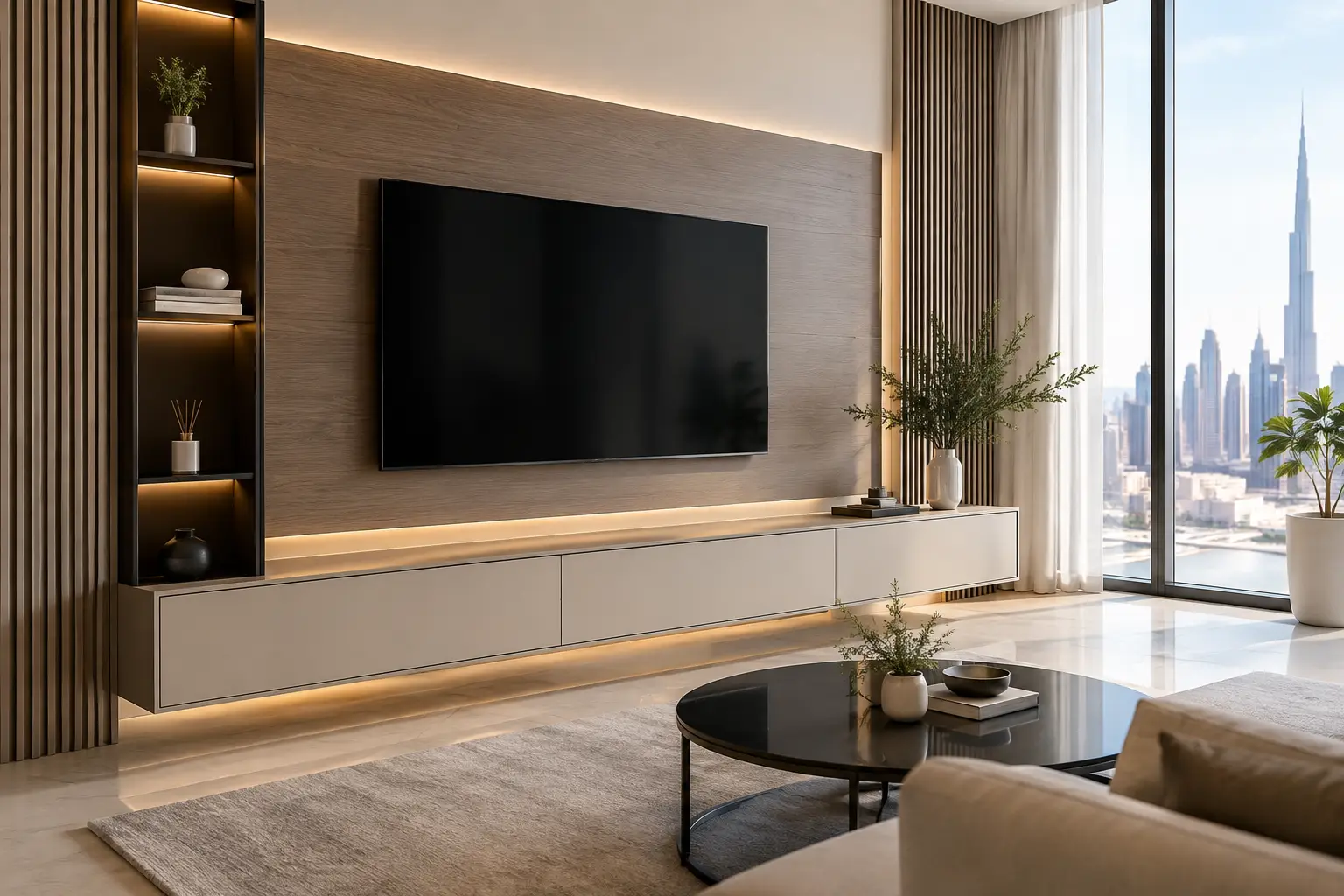
A well-planned tv unit design dubai residents choose is never just a place to mount a screen. It is the visual anchor of the living room, a storage solution for everyday technology, and often the first detail guests notice when they enter the home. In Dubai, where contemporary apartments, villas, and penthouses call for polished interiors, a custom TV wall can bring order, warmth, and a stronger sense of character to the entire space.
The best result comes from treating the unit as part of the room’s architecture rather than as a standalone piece of furniture. Its proportions, materials, lighting, wiring, and storage must work together. A beautiful panel that leaves cables exposed or overwhelms a compact room will not deliver the refined, functional finish homeowners expect.
Why a Custom TV Unit Changes the Room
A television naturally draws attention, even when it is switched off. Without a considered setting, it can make a living room feel unfinished. A custom TV unit gives that focal point purpose by framing the screen, concealing equipment, and connecting the television wall to the flooring, ceiling, seating, and decorative finishes around it.
Customization is especially valuable in Dubai homes because layouts vary widely. A wall in a Downtown apartment may be narrow but tall, while a villa majlis or family lounge may have a broad feature wall that needs greater presence. Ready-made units are designed for standard dimensions. A bespoke solution responds to the real width of the wall, the viewing distance, the position of doors and windows, and the storage needs of the household.
It also supports a cleaner daily routine. Routers, gaming consoles, sound systems, remote controls, chargers, and media accessories can be organized behind ventilated cabinetry instead of being left on open surfaces. This is one of the most practical reasons to invest in a professionally designed unit, particularly for busy families and homeowners who want an elegant space that remains easy to maintain.
The Foundation of TV Unit Design Dubai Homes Need
The strongest TV unit design Dubai projects begin with accurate site measurements and a clear understanding of how the room is used. The screen size matters, but it should not determine the entire composition. A large television on a shallow, oversized wall can look disconnected, while a small television on an overly detailed panel may lose impact.
A designer considers the screen’s center height, usually based on the seated eye level of the primary users. The distance between seating and screen should also guide the choice of television size and the wall treatment around it. This creates comfortable viewing while keeping the proportions visually balanced.
Wall conditions are equally important. Concrete walls, gypsum partitions, existing cladding, electrical points, and AC controls can all affect installation. A professional fit-out team plans these details before fabrication, avoiding unnecessary alterations after the unit is installed.
Storage Should Match Real Habits
A TV unit should solve a storage problem, not create one. Before choosing cabinets and shelves, consider what needs to be stored nearby. Some clients need closed drawers for children’s toys, documents, or extra accessories. Others want open display shelves for books, art pieces, or curated collectibles.
Closed storage delivers a calmer, more minimal appearance, while open shelving adds personality and depth. Many successful designs combine both. Lower cabinets can conceal everyday clutter, while a limited number of open niches provide space for decorative items without making the wall appear crowded.
For entertainment equipment, ventilation is essential. Cabinets should allow heat to dissipate, and cable routes should be planned to keep wiring accessible for maintenance. These small technical decisions protect equipment and preserve the clean finish of the installation.
Choose Materials for Appearance and Performance
Material selection shapes the mood of the room. Fluted wood panels can add warmth and vertical rhythm. Natural stone or marble-look porcelain creates a more luxurious statement. Veneer, textured laminates, lacquered finishes, glass, metal trims, and fabric-backed panels can each serve a purpose when specified correctly.
The right choice depends on the desired look, budget, and maintenance expectations. Natural marble offers distinctive veining and premium appeal, but it requires careful selection and installation. Porcelain slabs can provide a similar visual effect with easier consistency and durability. Wood veneer brings authenticity and depth, whereas high-quality laminates are often more practical for households seeking scratch resistance and straightforward upkeep.
In Dubai’s bright interiors, glossy finishes need thoughtful positioning. They can reflect daylight and television glare, particularly when the unit faces large windows. Matte laminates, textured surfaces, or timber finishes may offer a more comfortable viewing experience in these conditions. There is no single best material – the appropriate finish depends on the room’s light, style, and use.
Lighting Makes the Feature Wall Feel Complete
Integrated lighting can make a TV unit feel more architectural, but it should be controlled rather than excessive. Warm LED strips behind panels, within display niches, or under floating cabinets can add depth after sunset and create a relaxed atmosphere for entertaining.
The color temperature should complement the rest of the interior. Warm white lighting generally suits residential lounges because it softens stone, wood, and neutral finishes. Cool lighting can work in a sharply contemporary setting, but too much of it may make a family room feel clinical.
Dimmable lighting is a worthwhile upgrade. It allows the feature wall to remain subtle during movie nights while providing enough illumination for evening use. The goal is to enhance the composition, not compete with what is on the screen.
Design Directions That Work in Dubai Interiors
A minimalist floating unit is a popular choice for apartments and modern homes. Wall-mounted cabinets create visual openness, and a simple panel behind the television keeps the composition clean. This approach works best when storage needs are moderate and the room benefits from a lighter appearance.
For villas and larger living rooms, a full-height feature wall can establish a stronger focal point. It may combine stone-look cladding, timber panels, integrated shelving, and concealed doors or storage. The key is restraint. A larger wall can accommodate more detail, but every finish should support a unified concept rather than compete for attention.
Contemporary classic interiors may call for framed wall panels, subtle molding, brass accents, and a refined stone center panel. This style can feel highly elegant when proportions are precise. It is less suitable for very compact rooms, where detailed paneling can make the wall feel busy.
For homeowners who prefer a softer, hospitality-inspired atmosphere, wood finishes, curved edges, fabric textures, and indirect lighting offer a more relaxed direction. These details work particularly well in family lounges and media rooms, where comfort matters as much as visual impact.
Avoid These Costly Planning Mistakes
The most common mistake is designing only for the television and ignoring the room around it. A TV wall should relate to the sofa placement, rug size, ceiling features, and circulation paths. If the panel is too wide, too dark, or too tall for the available area, it can make the entire room feel unbalanced.
Another mistake is finalizing finishes before confirming technical requirements. Power outlets, internet points, speaker wiring, access panels, and ventilation should be addressed in the design stage. Retrofitting them later can lead to visible cables, unnecessary wall cutting, and compromised workmanship.
Homeowners should also avoid choosing a unit purely from a showroom image. A design that looks impressive in a large display space may not suit a lower ceiling, narrow wall, or sunlit apartment. Tailored planning creates a far better result than copying a trend without adapting it to the property.
From Concept to Finished Installation
A reliable design-and-execution process starts with consultation. The designer evaluates the room, listens to the client’s style preferences, reviews storage and technology needs, and develops a layout that fits the property. Material samples, finish combinations, and lighting details should be discussed before production begins.
Fabrication quality is where the concept becomes real. Clean joinery, accurate alignment, durable hardware, concealed cable management, and careful installation define whether a TV unit will look premium over time. At Al Sahm Decoration Design, the focus is on creating customized residential interiors that combine visual elegance with practical daily use, from initial planning through final execution.
A TV unit should make the room easier to live in and more rewarding to come home to. When the layout, finishes, storage, and technical details are planned as one composition, the television wall becomes a lasting part of the home rather than a temporary backdrop. A professional consultation is the right first step for turning that wall into a feature that truly fits your space.
Planning a project? See our salon interior design and fit-out in Dubai services, or message us on WhatsApp for a free site visit and quotation.


Comments are closed