
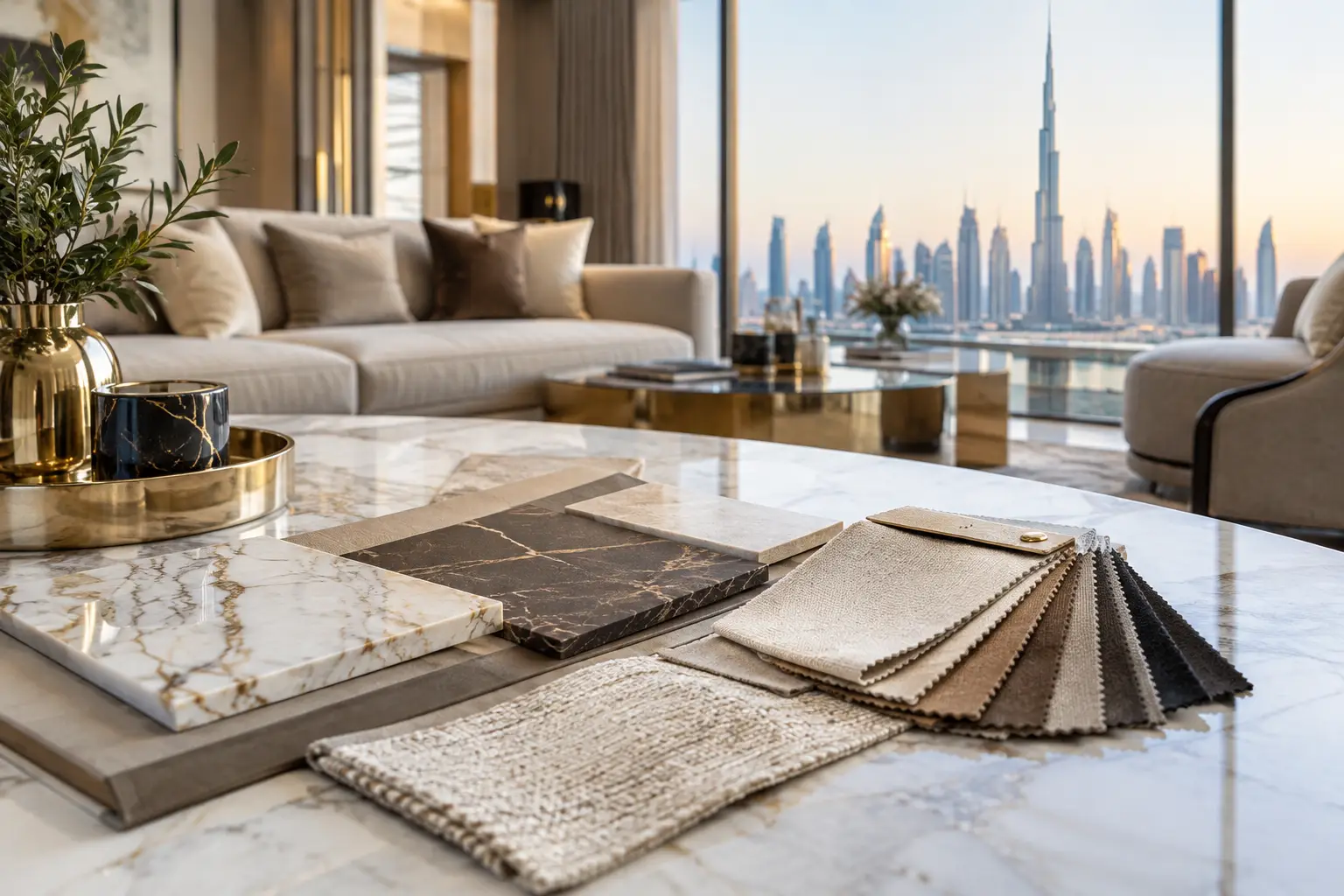
A marble reception desk may create an immediate impression, but the first luggage wheel scratch, coffee spill, or intensive cleaning cycle will reveal whether it was the right specification. Choosing luxury finishes is not simply about selecting the most expensive surface in a showroom. It is about selecting materials that express quality while standing up to the way a Dubai office, restaurant, retail space, or home is actually used.
For a premium interior, every visible detail contributes to the experience: the warmth of timber, the weight of hardware, the reflection in glass, and the feel of flooring underfoot. The strongest results come from decisions that connect aesthetic ambition with performance, maintenance, budget, and skilled installation.
Choosing Luxury Finishes Starts With Performance
Luxury should feel effortless to the people using a space. For the owner or facilities team, however, it should be carefully planned. A finish that looks exceptional on a sample board can become a recurring expense if it scratches easily, stains under daily use, or requires specialist care that is not practical for the property.
Start by defining the demands of each area. A boardroom, executive office, boutique retail store, and family living room do not need the same materials. Reception counters and restaurant tabletops face frequent contact and cleaning. Flooring at an entryway must manage sand, moisture, and foot traffic. A bathroom requires finishes that tolerate humidity and water exposure. Bedrooms and private lounges offer more freedom to prioritize softness, texture, and visual character.
This is where material selection becomes a professional exercise rather than a matter of personal taste alone. Natural stone, for example, offers distinction and depth that manufactured materials rarely duplicate. Yet some stones are porous and need sealing, while polished surfaces can show etching or scratches. Porcelain slabs can provide a refined stone-like appearance with excellent durability and lower maintenance. Neither choice is automatically better. The appropriate choice depends on placement, desired character, and the level of care the client is prepared to support.
Build a Clear Material Hierarchy
A luxury interior does not need every surface to compete for attention. In fact, too many statement finishes can make a space feel expensive without feeling resolved. The more considered approach is to create a hierarchy: one or two focal materials, supported by quieter finishes that give the design room to breathe.
In an office, a feature stone wall or richly veneered reception desk may establish the first impression. It can be balanced with matte wall finishes, restrained flooring, and carefully selected metal detailing. In a residence, natural timber cabinetry or book-matched stone may become the visual anchor, while textured paint, upholstery, and soft lighting add depth without clutter.
Texture matters as much as color. Matte finishes tend to feel contemporary and composed, while polished surfaces bring brightness and formality. Brushed brass offers a warmer, more forgiving look than mirror-polished metal, which can show fingerprints quickly. Fluted glass delivers privacy and a crafted visual layer, while clear glass keeps sightlines open. These decisions affect not only style but also daily use and cleaning requirements.
A well-planned palette should also account for lighting. Materials rarely look identical in daylight, warm evening lighting, and strong commercial illumination. Before final approval, review large samples in the intended space whenever possible. A beige stone that feels calm in a showroom may appear gray under cool office lighting. A dark wood veneer can look rich and inviting in one room but overly heavy in another with limited natural light.
Specify for Dubai’s Climate and Use Patterns
Dubai interiors have specific conditions that should influence finish choices. Heat, dust, intense sun exposure, and high-use commercial environments make durability a central consideration. Materials installed near windows or exterior-facing glazing should be reviewed for their resistance to fading, movement, and heat-related stress.
For flooring, porcelain, quality natural stone, engineered wood, and luxury vinyl can all work beautifully, but each serves a different purpose. Porcelain is a strong choice for high-traffic zones because it is hard-wearing, available in large formats, and easy to maintain. Natural stone creates a distinctive premium presence but needs the right sealing and care plan. Engineered wood brings warmth to executive areas and residences, although it is better suited to controlled indoor conditions than wet or heavily exposed spaces.
Wall finishes deserve the same attention. Decorative paint, wood paneling, fabric-backed wallcoverings, microcement, and stone can elevate an interior, but their success depends on preparation and installation. A premium wallcovering applied over an uneven substrate will not look premium for long. Similarly, finely detailed joinery needs stable materials, correct edge finishing, and experienced craftsmanship to maintain clean lines over time.
For restaurants and hospitality spaces, hygiene and turnover should guide decisions. Upholstery needs stain resistance or practical replaceability. Countertops should withstand cleaning chemicals and heavy service. Decorative lighting should support the atmosphere without creating difficult maintenance access. Luxury in hospitality is measured by how well guests feel cared for, not by how fragile the materials appear.
Invest Where People Touch and Notice
Not all finishes have the same effect on perceived quality. Clients, guests, and employees notice tactile, eye-level details first. Door handles, cabinet pulls, switches, faucets, reception counters, flooring transitions, and joinery edges often say more about the standard of a project than a costly surface installed in a less visible location.
This does not mean every item must be imported or custom-made. It means the budget should be allocated intelligently. A durable, well-proportioned handle in a consistent finish can elevate standard doors. Clean stone-to-metal transitions can make a simple floor look more refined. Custom joinery with accurately aligned grain and shadow gaps can create a high-end result without overloading the room with decorative elements.
Lighting is another finish in its own right. It defines how materials are seen and how a space feels at different times of day. Warm lighting can bring out the depth of timber and stone, while carefully positioned wall washers can highlight texture without creating glare. In workplaces, lighting must also support focus, comfort, and task performance. Decorative fixtures should complement, not compromise, the functional lighting plan.
Balance Custom Details With Long-Term Value
Customization is often what separates a generic fit-out from an interior that reflects a company’s brand or a homeowner’s lifestyle. A custom reception desk, tailored storage wall, feature ceiling, or made-to-measure vanity can use space more effectively and create a distinct identity. However, customization should serve a purpose beyond appearance.
Ask whether the detail improves function, strengthens the visual concept, or solves a spatial challenge. If it does, it is likely a valuable investment. If it is included only because it looks impressive in a reference image, it may add cost and complexity without improving the completed space.
It is also wise to consider replacement and maintenance before approving a highly specialized item. Can a damaged panel be repaired? Is the selected finish available locally if future work is needed? Will the supplier provide consistent batches for a phased commercial project? These practical questions protect the investment and reduce avoidable delays.
Avoid Decisions Based on Samples Alone
Small samples are useful, but they can be misleading. A veined marble piece, timber veneer, or textured fabric can vary significantly across a larger area. Requesting a mockup, reviewing a full slab, or approving a joinery sample can prevent expensive surprises during execution.
This is especially valuable when combining materials. The undertone of a metal finish may clash with the veining in stone. A timber selected under showroom lighting may not complement the flooring once installed. Professional coordination helps ensure that all materials are assessed as one composition, not as separate purchases.
At Al Sahm Decoration Design, finish selection is approached as part of the wider design and fit-out strategy. The objective is to create interiors that represent the client’s identity while meeting the practical demands of the site, schedule, and intended use.
Make the Final Selection With Confidence
The best luxury finishes are not necessarily the rarest or most costly. They are the ones that look appropriate, feel considered, perform reliably, and retain their appeal after months of real use. A trusted design and execution partner can help compare options honestly, identify where premium investment will have the greatest impact, and ensure the installation matches the quality of the specification.
When planning a new workspace, commercial venue, or residence, bring the full picture to the material conversation: who uses the space, how it will be maintained, what impression it should create, and where the budget can work hardest. A thoughtful consultation before materials are ordered can turn individual finishes into an environment that continues to feel exceptional long after handover.


Comments are closed