
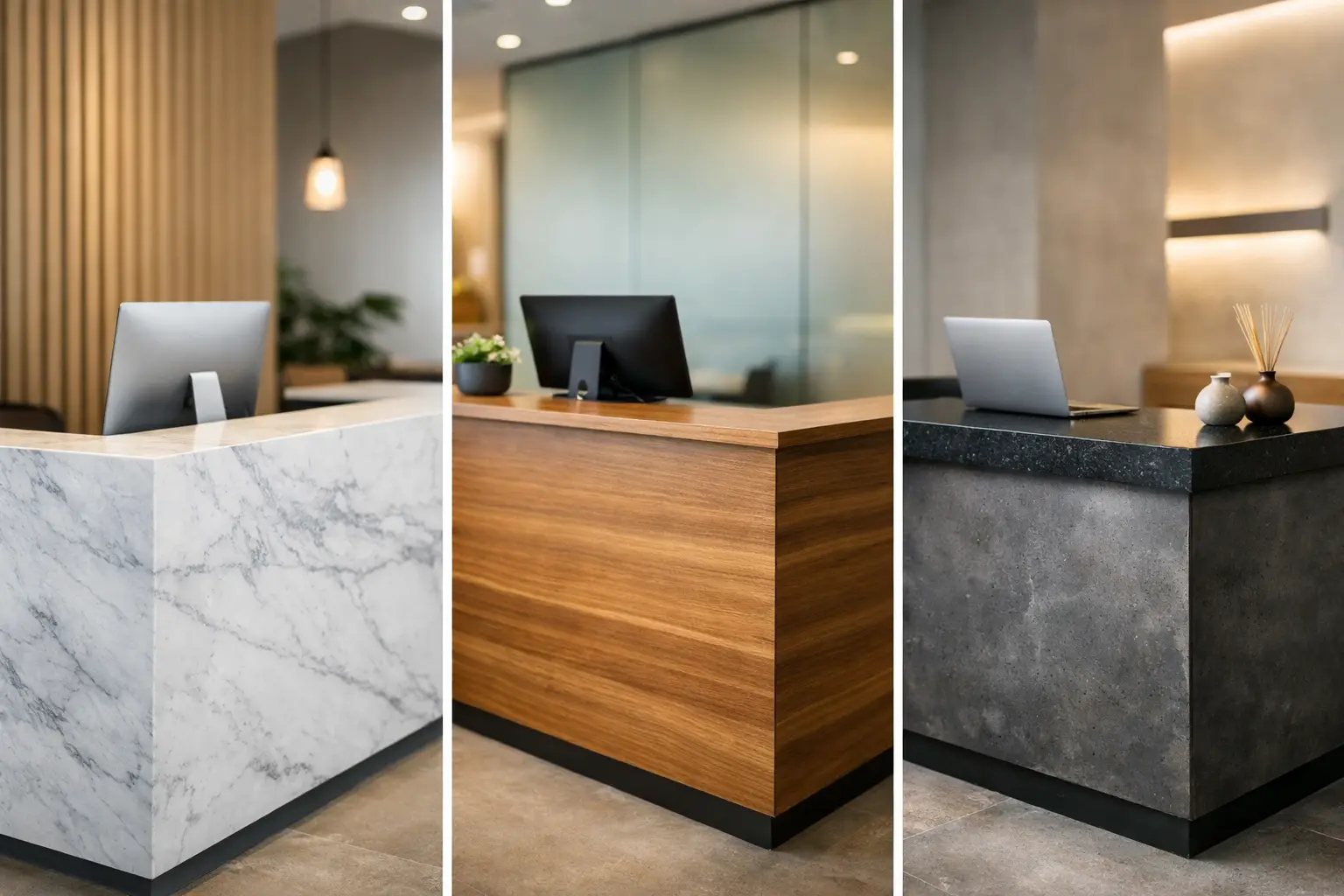
A reception desk is more than a work surface. It is the first physical point of contact between your business and every visitor, client, supplier, or prospective employee who enters the space. Choosing the best reception desk materials means balancing visual impact with the realities of daily operation: high-touch surfaces, cleaning requirements, cables, storage, lighting, branding, and long-term wear.
For an office, retail store, clinic, hotel, or restaurant, the right material should support the brand experience without becoming difficult to maintain. A desk that looks refined on opening day but scratches easily, stains under regular use, or clashes with the rest of the interior can quickly become an expensive compromise. The strongest reception areas are planned as part of the wider fit-out, with materials selected for their performance as well as their appearance.
What Makes a Reception Desk Material the Right Choice?
There is no single best material for every reception desk. A law firm may need the warmth and authority of natural wood veneer, while a contemporary technology company may prefer a crisp solid-surface counter with integrated lighting. A busy medical reception area needs hygienic, nonporous finishes, whereas a boutique hospitality venue may prioritize texture, craftsmanship, and a memorable visual statement.
Before selecting finishes, consider traffic levels, the type of work carried out at the desk, the desired level of maintenance, and the life expectancy of the interior. Reception desks should also be designed around accessibility, with a lower transaction point where needed and enough durable workspace for staff to operate comfortably.
Material choice should align with the rest of the environment. Flooring, wall finishes, feature lighting, glass partitions, and signage all affect how the desk is perceived. A high-quality material can still feel out of place if it is not coordinated with the overall space plan.
Best Reception Desk Materials to Consider
Laminate: Practical, Versatile, and Cost-Conscious
High-pressure laminate remains one of the most practical choices for commercial reception desks. It is available in a wide range of wood grains, solid colors, stone effects, metallic looks, and textured finishes. This flexibility allows businesses to achieve a tailored appearance without the cost of using natural materials across the entire desk.
Laminate performs well in offices, schools, service counters, and high-traffic commercial spaces because it is relatively resistant to scratches and easy to clean. It also works particularly well for large desk fronts, side panels, and built-in storage units.
The trade-off is that lower-grade laminate can look flat or show edge damage over time. The quality of fabrication matters as much as the finish itself. Well-executed edging, moisture-resistant board, and carefully aligned joints give laminate furniture a far more premium result.
Wood Veneer: Warmth With a Professional Presence
Natural wood veneer gives a reception desk depth, character, and a sense of permanence that printed wood finishes cannot fully replicate. Oak, walnut, ash, and darker stained veneers are popular choices for executive offices, financial firms, professional services, and hospitality interiors.
Veneer is especially effective when a business wants its entrance to feel established, welcoming, and refined. It can be paired with stone, metal, glass, or matte lacquer panels to create contrast and prevent the desk from feeling overly traditional.
However, veneer requires more care than laminate. It can be vulnerable to sharp impacts, excess moisture, and direct sun exposure, depending on the finish used. It is best specified for feature surfaces rather than unattended service counters that receive heavy abuse throughout the day. A commercial-grade protective coating helps preserve its appearance while retaining the natural grain that makes the material distinctive.
Solid Surface: Clean Lines and Easy Maintenance
Solid-surface materials are a strong option for businesses seeking a sleek, contemporary desk with minimal visible joints. Their nonporous finish makes them suitable for clinics, wellness centers, beauty spaces, laboratories, and hospitality settings where cleanliness is a central concern.
One of the main advantages is repairability. Minor scratches and marks can often be refinished, helping the desk maintain a fresh appearance over years of use. Solid surface can also be thermoformed into curved counters, integrated transaction tops, and custom shapes that would be difficult to achieve with stone or wood.
This material is usually more expensive than laminate, so it is often used strategically on the countertop or a prominent feature element rather than throughout the full desk. In the right setting, its smooth finish and precise detailing justify the investment.
Natural or Engineered Stone: Premium and Durable
Marble, granite, quartz, porcelain slabs, and sintered stone create an immediate sense of quality at a reception desk. These materials are ideal for luxury offices, high-end retail stores, hotel lobbies, real estate showrooms, and residential building entrances where the reception experience must feel elevated from the first moment.
Engineered quartz offers a consistent appearance and good resistance to stains, making it practical for worktops. Porcelain and sintered stone are also increasingly popular because they can replicate natural stone while offering excellent resistance to heat, scratches, and moisture. Natural marble has an unmatched visual richness, but it is more porous and requires sealing and appropriate maintenance.
Stone is heavy and needs a properly engineered supporting structure. It can also add significant cost to transportation, fabrication, and installation. For many projects, using stone on the reception countertop, plinth, or a central feature panel provides the desired impact without making the entire desk unnecessarily expensive.
Metal: Crisp, Contemporary, and Brand-Forward
Metal finishes can give a reception desk a confident modern edge. Powder-coated steel, stainless steel, brushed brass, bronze, aluminum, and perforated metal each create a different character. Dark metal frames complement industrial or contemporary office interiors, while brass or bronze accents can bring warmth to hospitality and premium retail environments.
Metal is rarely used alone for the whole desk because it can feel cold, show fingerprints, or become visually overpowering. It is most effective as a detail: a recessed base, trim line, logo panel, mesh screen, or protective counter edge. Combined with wood, stone, or solid surface, metal creates a balanced and deliberately designed result.
The selected finish should suit the expected level of contact. Highly polished materials look striking but show marks quickly. Brushed, textured, or powder-coated finishes are usually more forgiving in busy public areas.
Glass: Light, Open, and Best Used Selectively
Glass can make a compact reception area feel brighter and less enclosed. Frosted, tinted, back-painted, and textured glass can be used for front panels, modesty screens, shelves, or branded features. It pairs naturally with glass partitions and is often chosen for modern corporate interiors.
For the primary work surface, glass may not be the most practical choice. It shows fingerprints, requires frequent cleaning, and can create glare under strong lighting. Tempered safety glass is essential in commercial applications, but even then, it is usually better as an accent material rather than the main operational surface.
Material Combinations Create Better Results
The most successful reception desks often combine two or three materials rather than relying on one finish throughout. A veneer front with a quartz countertop, for example, offers warmth where visitors see it and durability where staff work. A laminate desk can be elevated with a solid-surface transaction ledge and discreet metal detailing. Stone-look porcelain paired with ribbed wood panels can create a distinctive focal point for a restaurant or boutique.
This approach also helps control the budget. Premium finishes can be concentrated on highly visible surfaces, while durable, value-focused materials can be used for internal carcasses, storage, and less visible side panels. The result feels customized without wasting investment on areas that do not contribute to performance or visual impact.
Do Not Overlook Construction and Daily Use
Even the finest material will not perform well if the desk is poorly designed. Reception counters need concealed cable management, accessible power points, adequate knee clearance, lockable storage, and durable internal boards. Edges should be protected where bags, chairs, deliveries, and cleaning equipment are likely to make contact.
Lighting deserves equal attention. Integrated LED strips can highlight a textured front panel or a company logo, but the lighting should support the desk rather than distract from it. Warm light tends to complement wood and brass, while cooler neutral light often suits stone, glass, and contemporary white finishes.
For high-traffic areas, ask practical questions early. Will staff serve coffee at the counter? Will visitors sign forms there? Is there a risk of moisture, food, luggage, or frequent package deliveries? These details determine whether a visually appealing finish will remain suitable after months of real use.
Choose Materials Around Your Brand and Operations
A reception desk should not be selected from a catalog in isolation. It should reflect the way your business wants to be remembered: calm and professional, premium and exclusive, energetic and creative, or warm and approachable. The material palette has a direct role in communicating that message.
Al Sahm Decoration Design approaches reception areas as complete commercial touchpoints, bringing together layout planning, customized joinery, material selection, lighting, and finish execution. This ensures the desk works for your staff while giving visitors a clear, confident first impression of your business.
The right desk material is the one that still looks intentional after daily use, supports the people working behind it, and makes every arrival feel like they have entered a space built with care.


