
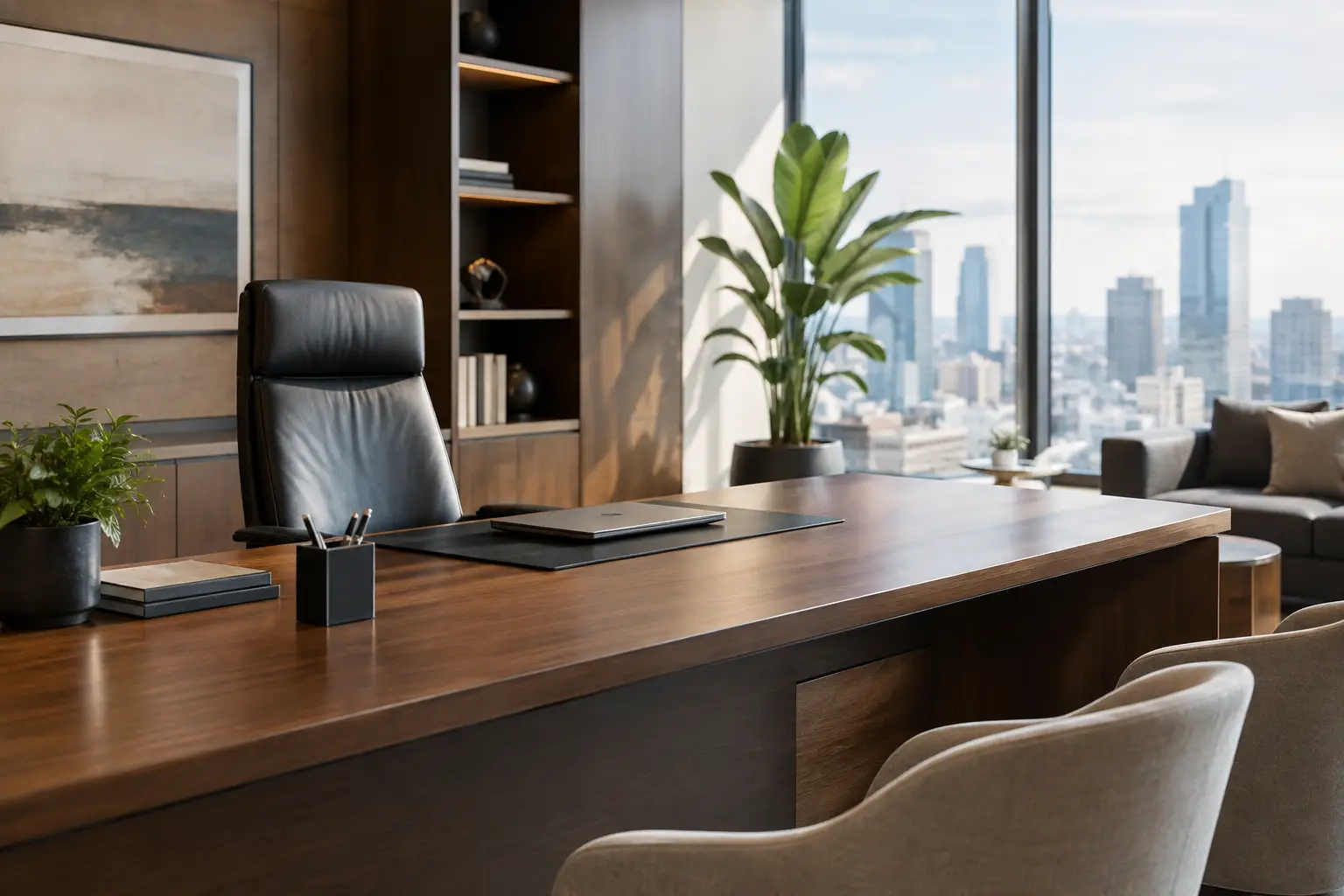
An executive office is often the room where major decisions, private discussions, and high-value client meetings take place. Knowing how to design executive offices means creating more than an impressive setting. The space must communicate leadership while giving its occupant a calm, practical environment for focused work.
For businesses in Dubai and across the UAE, the right executive office can strengthen brand perception from the moment a visitor enters. It should feel considered, comfortable, and aligned with the organization’s standards – without becoming oversized, overly decorative, or difficult to use every day.
Start With the Executive’s Working Style
The best design begins with the person using the office. A managing director who spends most of the day in confidential meetings needs a different layout from a founder who works closely with a small team. Before selecting furniture or finishes, define how the office will function during a normal week.
Consider the balance between focused desk work, video calls, internal discussions, client meetings, and document storage. Also consider how much privacy is required. A senior executive may need clear sightlines to the entrance and a meeting area that feels separate from the main workstation. In a compact office, those functions can still coexist through thoughtful furniture placement and discreet zoning.
The size of the room matters, but it should not dictate the quality of the experience. A large office with too much empty floor space can feel cold and wasteful. A smaller office can feel highly distinguished when every element has a purpose and the circulation remains clear.
How to Design Executive Offices With a Strong Layout
An executive office should have defined zones, even when it is not physically divided by walls. The workstation is the operational center, while the meeting area, storage wall, and relaxation corner support different parts of the executive’s day.
Position the main desk to create confidence and comfort. In many offices, placing it with a solid wall behind the executive gives the room a more grounded and authoritative feel. The desk should not block the entry route or force visitors to squeeze through a narrow gap. There should be enough room for the executive to move freely, access storage, and welcome guests without disrupting their work.
A small round table or a pair of lounge chairs can work well for informal conversations. For formal presentations or meetings with several visitors, a dedicated meeting table may be the better choice. The decision depends on room dimensions and meeting frequency. Trying to fit both into a limited space can make the office feel crowded.
Storage deserves the same planning as the desk. Integrated cabinetry keeps paperwork, technology, refreshments, and personal items out of sight. Custom-built storage can also create a clean architectural backdrop, especially when it combines closed cabinets with a limited number of open display shelves. The goal is not to fill every wall. It is to keep essential items accessible while preserving a composed appearance.
Choose Materials That Reflect the Business
Premium finishes are valuable when they reinforce the company’s identity and perform well over time. Natural wood, stone-look surfaces, textured wall panels, leather accents, brushed metal, and high-quality fabrics can all bring depth to an executive setting. The right combination depends on the brand.
A financial or legal firm may prefer darker timber, restrained colors, and tailored detailing that conveys discretion. A technology company may lean toward lighter woods, acoustic fabrics, integrated digital displays, and clean-lined furniture. A creative business can introduce stronger art, color, or distinctive materials while maintaining an organized professional foundation.
Avoid selecting finishes only because they look impressive in a showroom. Executive offices receive daily use, and surfaces should be durable, easy to maintain, and appropriate for the local climate. Materials must also work together under the office lighting. A dark veneer that feels rich in natural daylight may look flat under poorly planned ceiling lights.
Custom joinery is often one of the strongest investments in an executive office fit-out. It can conceal cables, integrate lighting, provide exact storage capacity, and make an ordinary room feel purpose-built. Quality craftsmanship is visible in the details: aligned panel gaps, clean edges, consistent finishes, and hardware that performs quietly and reliably.
Prioritize Comfort, Privacy, and Acoustics
Visual elegance alone cannot make an executive office successful. If conversations can be heard from the corridor or adjacent workstations, the office cannot support sensitive business discussions. Acoustic planning should be addressed early, particularly in glass-partitioned layouts.
Acoustic wall panels, insulated partitions, solid doors with proper seals, carpeting or rugs, and fabric-upholstered seating can reduce sound transfer and soften echo. Glass partitions may be useful for bringing light into the office and maintaining a sense of openness, but they should be specified carefully. Frosted films, blinds, or switchable privacy treatments can protect confidential meetings while preserving a modern feel.
Thermal comfort also affects productivity. Ensure that air-conditioning distribution does not blow directly onto the executive desk or guest seating. In Dubai, reliable cooling is essential, but a room that is too cold can be just as distracting as one that is warm. Lighting controls, window treatments, and HVAC coordination should be part of the design and fit-out plan rather than last-minute adjustments.
Layer the Lighting for Better Decisions
One central ceiling fixture rarely provides enough light for an executive office. A layered lighting scheme gives the room flexibility throughout the day and supports different tasks without glare.
Ambient lighting provides overall brightness. Task lighting at the desk helps with reading and detailed work. Accent lighting can highlight a feature wall, artwork, shelving, or brand element. When these layers are controlled separately, the executive can set a focused tone for work, a welcoming mood for visitors, or a polished backdrop for video calls.
Natural light should be used wherever possible, but it needs control. Desk placement should avoid direct glare on monitors, and blinds should reduce heat and harsh sunlight without making the office feel closed off. Warmer lighting is generally more inviting in meeting areas, while neutral task lighting can support paperwork and digital work.
Integrate Technology Without Visual Clutter
Technology is essential in a modern leadership space, but visible wires and improvised equipment quickly weaken the design. Plan for power, charging, data connections, screens, video conferencing, and wireless presentation tools before construction begins.
A well-designed executive office integrates these requirements into the desk, credenza, wall panels, and meeting area. Screens can be recessed or positioned within a feature wall. Cable management can be built into furniture. Charging points should be convenient for both the executive and visitors, not hidden behind heavy cabinets or across walking paths.
This is especially important for hybrid meetings. The camera angle, sound quality, background, and lighting all influence how the company is perceived by remote clients and partners. A clean branded backdrop is more effective than an overly busy decorative wall.
Add Brand Character With Restraint
An executive office should represent the business, but it does not need to function as a showroom for every brand color or company achievement. A refined logo feature, selected artwork, a framed project image, or a carefully chosen color accent can be enough to make the identity clear.
Personal items should be equally intentional. Books, awards, family photographs, and objects collected through travel can make the office feel authentic, but too many visible items create distraction. Edit the display areas so the room remains polished and easy to maintain.
For growing businesses, flexibility is also worth considering. Modular seating, adaptable storage, and a layout that can accommodate new technology can extend the life of the investment. Designing for the next three to five years is usually more valuable than creating a space that only suits current habits.
Work With an Experienced Fit-Out Partner
Executive office projects require coordination between design, space planning, joinery, electrical work, glass partitions, lighting, finishes, and installation. Managing these elements separately can lead to delays, inconsistencies, and avoidable cost changes. A full-service partner helps turn the approved concept into a finished space with accountability at every stage.
Al Sahm Decoration Design provides tailored office interior and fit-out solutions that bring together functionality, premium materials, and brand-focused design. From initial consultation through final execution, the aim is to create executive offices that feel professional, perform reliably, and support the way leaders work.
A well-designed executive office should make every meeting feel more prepared and every workday more focused. When layout, privacy, materials, and technology are planned as one complete environment, the space becomes a confident reflection of the business behind it.
Planning a project in Dubai? See our office interior design and fit-out in Dubai, or contact Al Sahm and call 055 443 2275 for a free site visit.


Comments are closed