A majlis is more than a formal sitting room. It is where family conversations continue late into the evening, guests are welcomed with warmth, and the character of a home becomes visible. The best modern majlis interior ideas preserve that sense of hospitality while replacing unnecessary ornament with comfort, proportion, and materials made for real daily use.
For homeowners in Dubai and across the UAE, a successful majlis must also respond to the local climate, the scale of the property, and the way the household entertains. A compact apartment majlis needs a different strategy than a large villa reception room. The goal is not to make every majlis look minimal. It is to create a refined setting that feels current, personal, and ready to receive people well.
Start With the Way You Host
Before selecting a sofa fabric or wall finish, decide what the room needs to do. Some families use the majlis as a dedicated guest area. Others want a flexible room for coffee, celebrations, quiet reading, and weekend gatherings. This choice determines circulation, seating depth, storage, and the level of formality.
A separate guest majlis can support more sculptural furniture and a focused visual statement because it does not need to accommodate every everyday activity. A family majlis benefits from generous seating, stain-resistant fabrics, integrated charging points, and concealed storage. In both cases, leave clear routes from the entrance to each seat. Guests should never have to navigate around tables or squeeze between large sofas.
1. Build Seating Around Conversation
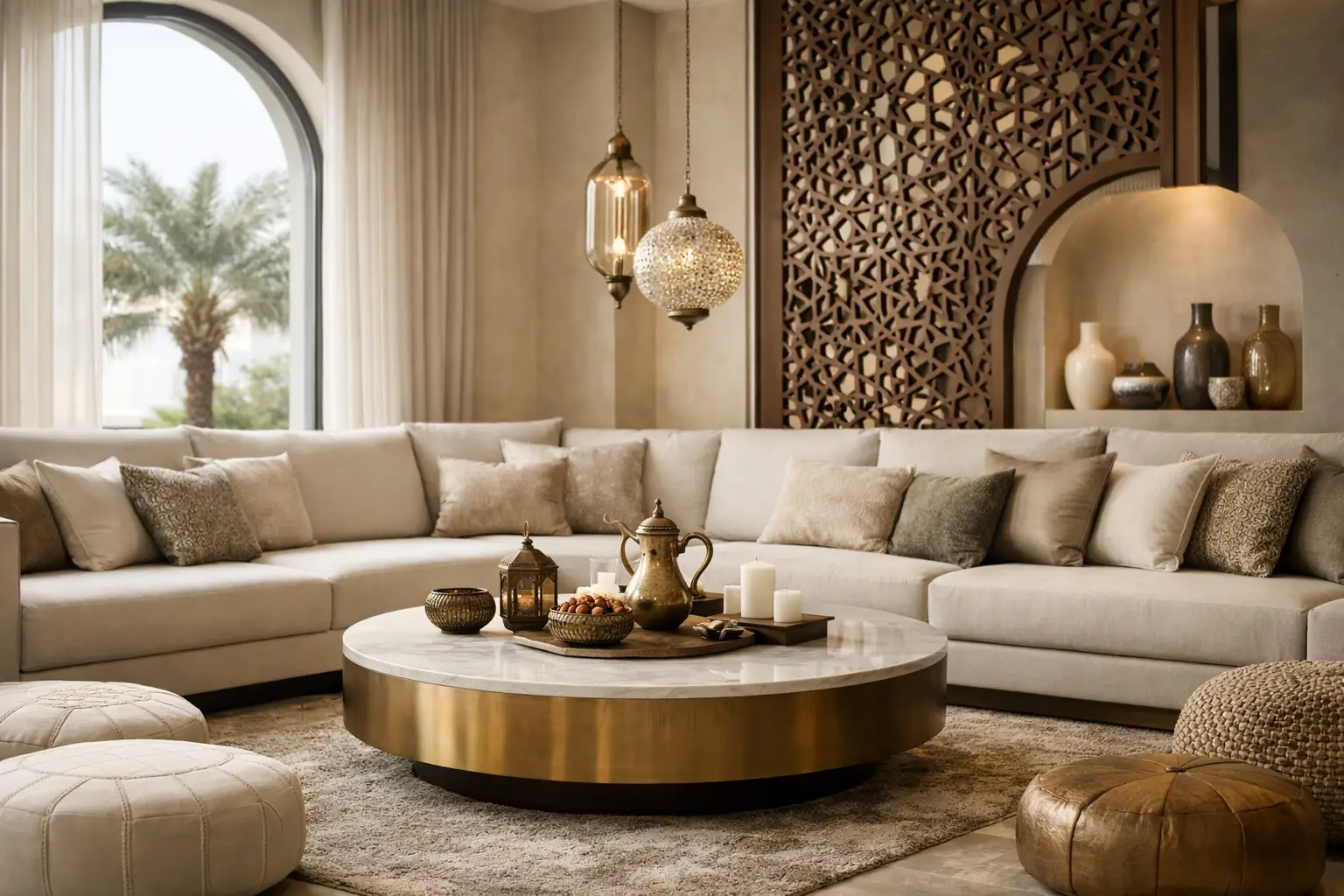
Traditional majlis layouts naturally encourage face-to-face interaction. Keep that principle, but give it a cleaner framework with a U-shaped or L-shaped arrangement of low-profile sofas and lounge chairs. This creates intimacy without making the room feel crowded.
In a square room, symmetrical seating on three sides works particularly well. In a long room, use two parallel sofas with occasional chairs at the ends. Avoid pushing every piece against the walls if the room is large enough. Floating the furniture slightly inward can make the setting feel intentional and improve the balance of the space.
2. Choose a Contemporary, Grounded Color Palette
Warm neutrals remain a strong foundation for a modern majlis. Sand, taupe, mushroom, ivory, soft gray, and muted stone shades create a calm backdrop that works well with daylight and warm evening lighting. They also allow the craftsmanship of timber, metal, and textiles to stand out.
A neutral scheme does not have to be plain. Add depth through one controlled accent color, such as deep olive, terracotta, charcoal, midnight blue, or burgundy. The right accent may appear in cushions, a rug border, artwork, or a single upholstered chair. Limiting the palette gives the room a more premium and composed result than using many competing colors.
3. Use Layered Lighting, Not One Central Fixture
A statement chandelier can establish a sense of arrival, especially in a double-height villa majlis. Yet it should not be the only source of light. Guests need flattering, comfortable illumination at eye level, while architectural details need subtle emphasis.
Combine a decorative central fixture with recessed ceiling lights, concealed cove lighting, wall sconces, and table or floor lamps. Put each layer on separate dimmers. This lets the majlis shift from bright daytime reception space to a softer evening setting without changing the furniture or decor.
4. Make the Ceiling Part of the Design
The ceiling often carries the strongest architectural opportunity in a modern majlis. A restrained gypsum design with recessed linear lighting can visually organize a large room. Timber-look panels, shallow coffers, or a centered feature panel can add dimension without overwhelming the interior.
The trade-off is ceiling height. Heavy detailing can make a low room feel compressed, so simpler lines are usually the better choice in apartments or smaller villas. In a taller room, a defined ceiling treatment helps bring the scale down to a more welcoming, human level.
5. Introduce Texture Through Honest Materials
Modern design is not limited to smooth white walls and polished surfaces. A majlis feels warmer when it combines tactile materials with clean shapes. Consider oak or walnut veneer, natural stone, fluted wall panels, brushed brass, linen-blend upholstery, boucle cushions, or hand-finished plaster.
Choose materials based on how the room will be used. Natural marble delivers visual impact but needs careful maintenance around drinks and food. Porcelain slabs can provide a similar stone appearance with easier upkeep. Similarly, pale fabrics look elegant but may not be practical in a busy family home. Performance textiles are often the more sensible long-term investment.
6. Create One Focused Feature Wall
A feature wall gives the majlis a clear focal point without filling the room with decorative objects. It may be a book-matched stone surface, a timber-and-brass composition, an upholstered panel, textured wallpaper, or a niche with softly lit shelving.
The best feature wall is related to the room’s architecture. Position it behind the principal sofa, at the far end of the seating layout, or around a fireplace-style media unit if the household wants a screen in the room. Keep the remaining walls quieter so the focal point can perform its role.
7. Balance Privacy With Openness
Privacy is central to majlis planning, particularly in homes that receive frequent guests. If the room is near the main entrance, a decorative screen, slatted partition, or a short transition corridor can prevent direct views into family areas. Glass partitions with sheer curtains are useful where daylight is valuable but visual separation is still needed.
The approach depends on the floor plan. Fully solid partitions provide the strongest privacy but can reduce natural light and make a smaller property feel divided. Semi-open screens preserve connection and brightness while giving the entrance sequence greater discretion.
8. Select a Rug That Defines the Gathering Area
A rug is not simply an accessory in a majlis. It anchors the seating and softens acoustics, which matters when several people are talking at once. Choose a size large enough for at least the front legs of sofas and chairs to sit on it. A rug that is too small can make even expensive furniture look disconnected.
Contemporary geometric patterns, understated Persian-inspired designs, and tonal textured rugs all work well. For a more formal majlis, a finely patterned rug can carry cultural richness. For a relaxed family room, a low-pile, easy-clean design is usually more practical.
9. Add Custom Joinery for a Finished Look
Custom joinery turns an attractive room into a fully resolved one. A built-in display cabinet can house coffee service, books, art objects, and discreet storage. A low console can conceal audio equipment, while a tailored sideboard can provide a place to serve refreshments during gatherings.
Proportion matters more than quantity. Oversized cabinetry can dominate a modest majlis, while a carefully scaled unit can make the room feel organized and valuable. Match timber tones and metal details to other finishes so the joinery appears integrated rather than added later.
10. Keep Technology Present but Discreet
Many clients want a television, sound system, charging points, or automated lighting in their majlis. These features can be accommodated without turning the room into a media lounge. Concealed wiring, flush-mounted speakers, hidden charging drawers, and integrated controls keep the visual focus on hospitality.
If a television is essential, treat it as part of the feature wall rather than the sole focal point. In a formal guest majlis, some homeowners prefer to omit it entirely. That decision often creates a calmer atmosphere and reinforces the room’s social purpose.
11. Use Art and Accessories With Restraint
A majlis should feel curated, not crowded. One large artwork, a pair of carefully selected wall pieces, or a framed calligraphic composition can add identity more effectively than many small decorations. Sculptural bowls, ceramics, and coffee-table books introduce personality when placed with room to breathe.
Consider scale before buying accessories. Small objects disappear in a large villa majlis, while too many large pieces can make a compact room feel heavy. A professional design plan helps establish the right visual rhythm before purchases are made.
12. Design for Comfort That Lasts Beyond the Reveal
Deep cushions, supportive backrests, and side tables within easy reach make guests feel considered. Seat height should be comfortable for a wide age range, and tables should be positioned so refreshments can be served without interrupting conversation. These details are less visible in photographs, but they define whether the room works over time.
Durability deserves the same attention as appearance. Specify finishes that can be cleaned, fabrics suited to the household, and quality hardware for cabinetry that will be used repeatedly. A well-executed majlis is not a short-lived display space. It is a room that continues to look composed after years of welcoming people.
Bring the Concept Together With Professional Execution
The strongest modern majlis interior ideas are tied together by a clear design direction, accurate space planning, and consistent execution. Mixing too many trends, finishes, or furniture styles can dilute the result. A tailored concept makes every decision, from lighting temperature to upholstery piping, feel connected.
Al Sahm Decoration Design helps homeowners translate their preferred level of tradition and modernity into a finished majlis with customized planning, material selection, joinery, and fit-out execution. Begin with how you want guests and family to feel in the room, then let the layout and finishes support that experience with confidence.