A majlis is more than a formal sitting room. It is where guests are welcomed, conversations continue long after dinner, and a home’s sense of hospitality becomes visible. The strongest modern majlis interior design ideas respect this cultural role while creating a space that feels lighter, more comfortable, and better suited to contemporary Dubai living.
A successful modern majlis does not need to look overly minimal or overly traditional. The best results come from balance: a clear layout for hosting, durable materials for frequent use, layered lighting for atmosphere, and carefully selected Arabic details that give the room identity without making it feel themed. Whether the majlis occupies a dedicated room, an open reception area, or a compact villa extension, every decision should support how the family actually receives guests.
Start With a Layout That Encourages Conversation
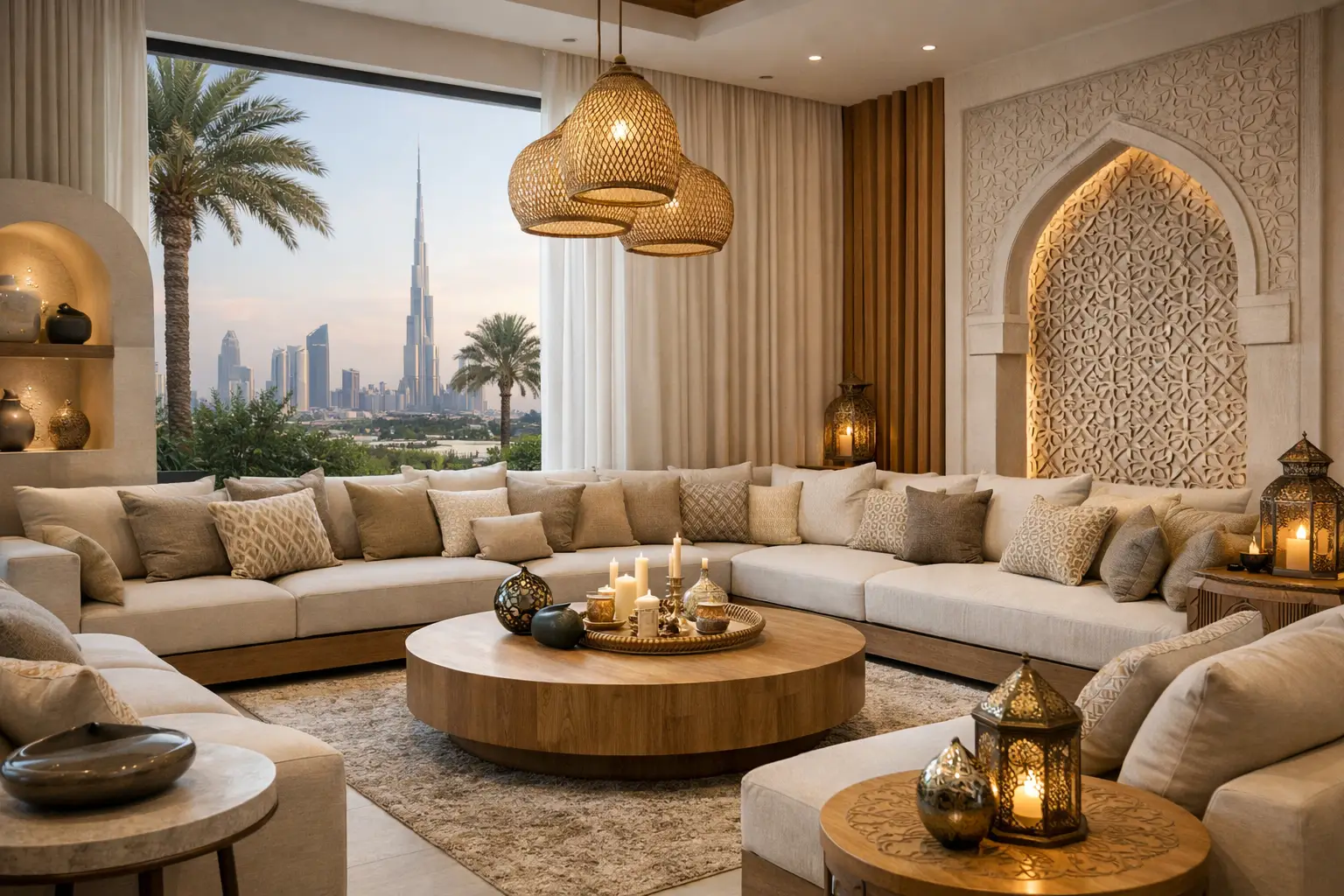
The traditional strength of a majlis is its social layout. Seating should allow guests to see and speak with one another easily, rather than directing every chair toward a television or a single focal wall. In a modern interpretation, this often means creating a perimeter of low-profile sofas or built-in upholstered benches, with generous circulation through the center of the room.
For larger homes, a U-shaped or L-shaped seating arrangement gives the room structure and can accommodate different group sizes. A central coffee table or a pair of nesting tables provides a practical surface without blocking movement. In more compact spaces, a continuous banquette along two walls can deliver the same welcoming effect while preserving floor area.
Privacy also matters. If the majlis is intended for formal visitors, position it near the entrance with a direct, discreet route from the foyer. A family majlis can sit deeper within the home and connect to the dining area or garden. The right choice depends on the household’s lifestyle, cultural preferences, and how often the room will be used for large gatherings.
Choose a Contemporary Arabic Color Palette
Modern majlis interiors benefit from a calm, grounded foundation. Warm white, sand, taupe, stone gray, and soft beige create an elegant backdrop that feels appropriate in Dubai’s bright natural light. These shades also allow craftsmanship, textiles, and feature walls to stand out without competing for attention.
Deep accents bring character. Olive green, muted teal, terracotta, charcoal, or midnight blue can be introduced through cushions, upholstery, rugs, or a single statement wall. For a more formal setting, restrained metallic touches in brushed brass, bronze, or antique gold add warmth and refinement.
Avoid using too many colors at once. A majlis with several bold patterns, high-gloss finishes, and ornate colors can feel visually crowded. A more polished approach is to select one dominant neutral, one accent color, and one metal finish, then repeat them with intention throughout the space.
Build Comfort Into Every Seat
A beautiful majlis will not succeed if guests do not feel comfortable staying in it. Seating depth, back support, fabric selection, and spacing all deserve professional attention. Low seating can look authentic and inviting, but it should still provide supportive cushioning, especially when guests may sit for extended periods.
Performance fabrics are particularly valuable for homes that entertain often. They are easier to maintain and better suited to tea, coffee, food, children, and regular use. Linen blends, textured woven fabrics, velvet accents, and high-quality leather can all work well, depending on the intended level of formality.
Custom upholstery gives homeowners more control over proportions and finishes. It is especially useful in majlis rooms with curved walls, window bays, columns, or unusual dimensions. A tailored built-in sofa can use these architectural conditions to advantage rather than leaving awkward gaps or wasted corners.
Use Feature Walls With Purpose
A feature wall is one of the most effective modern majlis interior design ideas because it can establish a focal point without filling the room with decoration. The key is choosing a finish that feels architectural, not temporary.
Fluted wood panels, natural stone, textured plaster, and large-format porcelain are reliable choices for a refined contemporary majlis. These materials introduce depth and texture while remaining durable and easy to coordinate with the rest of the home. Wood finishes in walnut, smoked oak, or light ash can soften a neutral room, while stone adds a more formal and enduring presence.
Arabic geometric patterns can be incorporated through laser-cut screens, subtle wall inlays, or panel details. Use them selectively. A single patterned partition, backlit niche, or carved panel can create a strong cultural reference. Repeating the motif on every surface can reduce the impact and make the room feel dated.
Consider Screens for Privacy and Light
Decorative screens are especially useful when a majlis connects to a foyer, hallway, or larger open-plan reception area. They can define the room, filter views, and preserve daylight without building a solid wall. Timber, metal, glass, or mixed-material screens can be customized to match the design language of the property.
Layer the Lighting Instead of Relying on One Fixture
A central chandelier can bring elegance to a majlis, but it should not be the only source of light. Layered lighting makes the room more flexible, more flattering, and more comfortable at different times of day.
Start with recessed ceiling lights for overall illumination. Add cove lighting to create a soft ambient glow and highlight ceiling details. Wall sconces or decorative pendants can bring warmth to seating areas, while concealed LED lighting inside niches adds depth to feature walls.
Dimmers are essential. Bright lighting may be useful when preparing the room or hosting a daytime gathering, while lower levels create a more relaxed atmosphere in the evening. Choose a warm color temperature, generally around 2700K to 3000K, to avoid the cold appearance that can make luxurious materials feel flat.
Make the Ceiling Part of the Design
In a majlis, the ceiling is often an opportunity rather than an afterthought. A simple tray ceiling with concealed lighting can make the space feel taller and more structured. For a more expressive design, consider timber slats, geometric gypsum patterns, or a central recessed panel that frames a chandelier.
The scale must match the room. An elaborate ceiling in a low or narrow majlis can feel heavy. Conversely, a large double-height reception area may need ceiling articulation to feel welcoming rather than empty. Good space planning considers the room as a full volume, not only its floor plan.
Add Hospitality Features That Work Quietly
Practical details are what make a majlis easy to use. A concealed tea and coffee station, integrated storage for serving pieces, discreet charging points, and a nearby washroom all improve the guest experience. These elements should be planned early, before finishes and furniture are finalized.
A display niche can hold curated artwork, books, incense accessories, or a small collection of decorative objects. Keep styling restrained. The room should feel personal and welcoming, not crowded with items that are difficult to maintain.
If a television is required, integrate it carefully into a wall panel or cabinet. In a formal majlis, it should not dominate the room. A concealed screen or a design that allows the television to blend into a dark stone, wood, or mirrored surface is often the better solution.
Select Materials for Long-Term Value
Majlis interiors are expected to make a strong first impression, but they must also withstand use. Natural stone, engineered stone, porcelain, solid timber veneers, quality upholstery, and durable metalwork often provide better long-term value than trend-driven finishes that age quickly.
Material selection should reflect the level of maintenance a homeowner is willing to accept. Natural marble is distinctive, for example, but it can require more care than porcelain with a stone effect. Velvet can create a rich look, but a high-traffic family majlis may perform better with a stain-resistant woven textile. There is no single correct answer – the best material is the one that matches the room’s use, budget, and desired level of upkeep.
For homeowners seeking a complete design-and-execution approach, Al Sahm Decoration Design can coordinate space planning, bespoke joinery, material selection, lighting, and fit-out details into one cohesive majlis project. This helps ensure that the finished room reflects the original vision rather than becoming a collection of disconnected choices.
The most memorable majlis does not rely on excess ornament. It creates a confident sense of welcome through proportion, comfort, thoughtful cultural references, and craftsmanship that feels considered from the first step inside.