A marble reception counter may create an immediate impression, but it can become a costly choice if it stains easily, conflicts with daily traffic, or requires care the team cannot realistically provide. That is why an effective interior material selection guide starts beyond appearance. For offices, homes, restaurants, and commercial properties in Dubai, the right materials must perform under real conditions while supporting the atmosphere you want people to remember.
Material decisions affect more than the final look of a space. They shape maintenance requirements, acoustic comfort, occupant well-being, operational costs, and the long-term value of a fit-out. A well-planned selection process turns a design concept into an environment that feels refined on opening day and remains practical years later.
Start With the Purpose of Each Space
No single material is right for every project. A luxury villa, a busy corporate office, a retail showroom, and a restaurant kitchen all have different demands. The first question is not, “What looks best?” It is, “How will this area be used every day?”
In a reception area, finishes should communicate confidence and quality while withstanding foot traffic, luggage, cleaning, and frequent contact. In workspaces, the focus often shifts to acoustic control, visual comfort, durable flooring, and surfaces that support productive routines. A restaurant requires materials that can manage spills, cleaning cycles, heat, and heavy use without losing character.
Residential interiors allow more room for personal expression, but performance still matters. A family living room may need stain-resistant upholstery and resilient flooring, while a formal lounge can accommodate more delicate finishes. Matching materials to the true use of the room prevents attractive concepts from becoming impractical investments.
Interior Material Selection Guide: Balance Beauty and Performance
A successful interior material selection guide weighs visual impact against durability, maintenance, safety, budget, and installation requirements. A premium finish is not automatically the best value if it needs constant repair or replacement. Likewise, choosing solely on initial cost can lead to a space that appears dated or worn before its time.
Flooring is a clear example. Natural stone offers distinction, longevity, and a strong sense of permanence, but the specific stone, finish, and sealing process must suit the area. Polished surfaces can look elegant in low-traffic settings but may be less appropriate near entrances or wet areas where slip resistance is essential. Porcelain tile can achieve a stone-like appearance with excellent durability and simpler maintenance, making it a smart choice for many commercial and residential applications.
Wood and wood-look finishes bring warmth to offices, homes, and hospitality spaces. Natural timber offers depth and authenticity, yet it can react to moisture, scratches, and direct sunlight if not properly specified. Engineered wood, high-quality laminate, or luxury vinyl alternatives may offer greater stability in high-use environments. The best choice depends on the desired appearance, expected traffic, and maintenance plan.
For walls, paint remains versatile and cost-effective, but it should be selected by finish as well as color. High-contact corridors, meeting rooms, and family spaces benefit from washable, durable paint systems. Feature walls may call for timber slats, textured panels, stone cladding, wallcoverings, or decorative plaster. These finishes add identity, though they should be positioned carefully so they do not become difficult to clean or repair.
Consider Dubai’s Climate and Building Conditions
Dubai’s climate places specific demands on interior materials. High outdoor temperatures, intense sunlight, dust, and the transition between humid exterior conditions and air-conditioned interiors can affect finishes over time. Materials should be selected with thermal movement, fading, moisture exposure, and cleaning needs in mind.
Window treatments and upholstery near large glazed facades need strong resistance to UV exposure. Without this consideration, rich colors can fade and fabrics may weaken prematurely. Choosing suitable linings, performance fabrics, and properly specified glazing solutions helps preserve the appearance of the interior.
Moisture resistance is equally important in bathrooms, pantries, kitchens, and areas adjacent to building services. Water-resistant boards, appropriate sealants, moisture-tolerant cabinetry, and correctly detailed floor transitions protect the fit-out from swelling, mold, and surface failure. These are not glamorous details, but they are often what determine whether a finished space continues to perform.
Material selection must also account for the existing building. Slab conditions, ceiling heights, mechanical systems, fire safety requirements, and access limitations can influence what is feasible. A professional site assessment identifies these issues before a finish is approved, reducing avoidable changes during construction.
Plan Materials as a Complete Palette
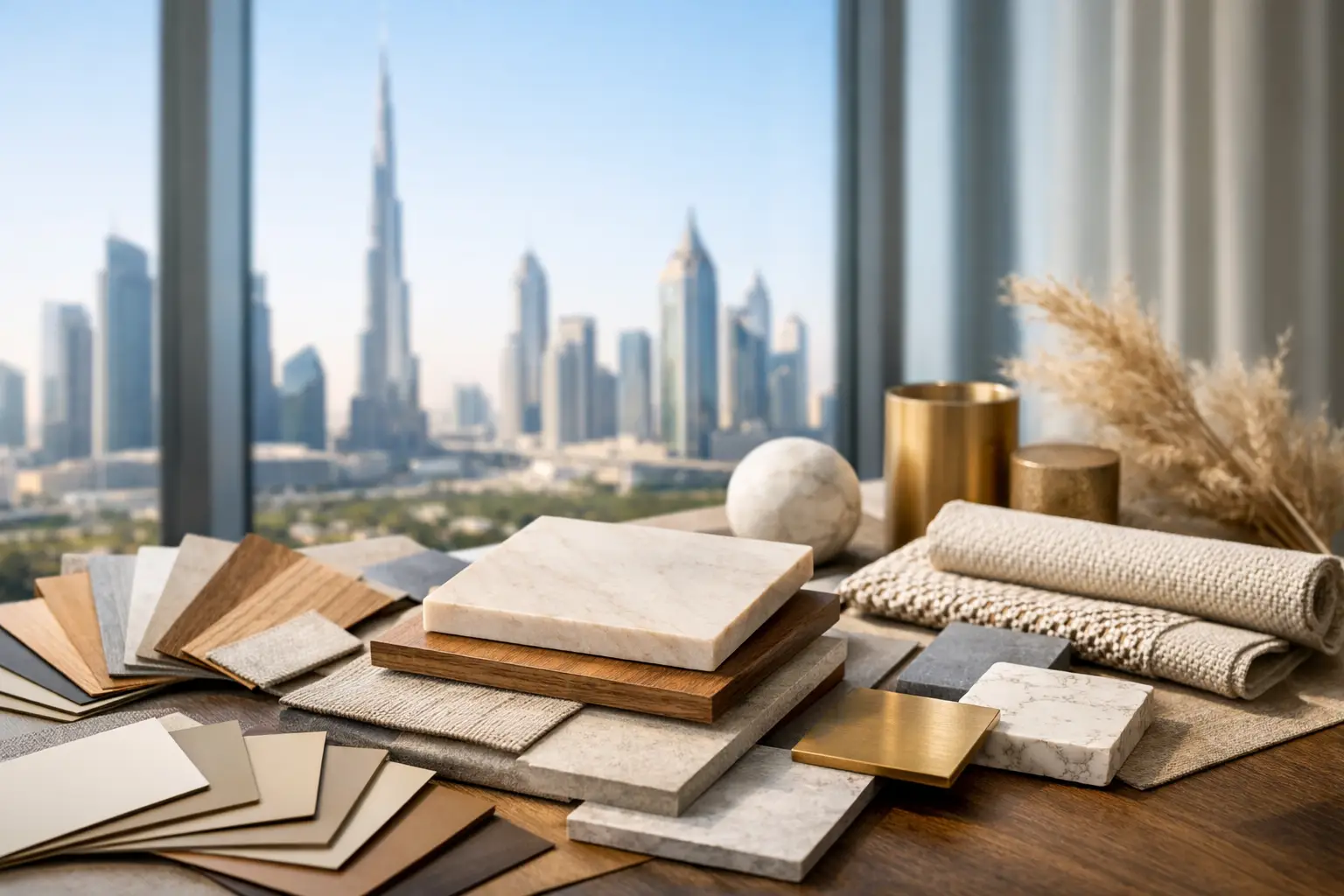
Strong interiors are built from coordinated material palettes, not isolated samples. A flooring sample may look excellent in a showroom but feel too cold when combined with reflective glass, bright lighting, and pale wall finishes. Reviewing materials together allows you to assess contrast, texture, undertones, and visual balance.
A commercial space often benefits from a disciplined palette: a durable base material, one or two accent finishes, and carefully selected metal, glass, or timber details. This approach creates a polished identity without visual clutter. For residential projects, the palette can be more layered, but it still needs a clear relationship between flooring, cabinetry, stone, fabrics, and lighting.
Texture deserves the same attention as color. Smooth glass, polished stone, matte paint, woven fabrics, and brushed metal each reflect light differently. Combining too many hard, reflective finishes can make a room feel noisy and impersonal. Adding acoustic fabrics, timber, textured wall finishes, or soft furnishings brings warmth and improves comfort.
Samples should be reviewed under the actual lighting conditions of the project whenever possible. Daylight, warm decorative lighting, and office task lighting can change the perceived color of stone, paint, fabric, and wood. This step is especially valuable for large surface areas, where minor variations become more visible.
Make Maintenance Part of the Design Decision
The most successful fit-outs are designed for the people responsible for operating them. Before approving a material, consider how it will be cleaned, how often it will need attention, and whether damage can be repaired without replacing an entire surface.
In offices and retail settings, modular carpet tiles can be practical because individual damaged sections can be replaced. In restaurants, non-porous table surfaces and washable upholstery can reduce downtime and protect the guest experience. In homes, durable quartz or sintered stone may be preferable to more porous natural materials in frequently used kitchens.
Maintenance does not mean sacrificing elegance. It means selecting finishes that deliver elegance within the realities of the space. A premium-looking material that withstands daily use protects the original design intent and reduces long-term operating pressure.
Prioritize Comfort, Acoustics, and Safety
People experience materials physically as well as visually. Hard floors, glass partitions, and exposed ceilings may suit a contemporary office aesthetic, but too many reflective surfaces can create distracting noise. Acoustic ceiling treatments, fabric panels, rugs, upholstered seating, and thoughtfully positioned partitions can improve concentration and privacy without compromising the design.
Safety should be built into every selection. Flooring in wet zones requires suitable slip resistance. Glass partitions should be specified and marked appropriately. Materials used in commercial interiors may need to meet fire-rated or code-related requirements, depending on their location and intended use. These decisions need to be coordinated early so that style, compliance, and project timelines remain aligned.
Indoor air quality also matters. Low-VOC paints, adhesives, and finishes can support a healthier indoor environment, particularly in offices, residences, and hospitality projects where people spend long hours indoors. This is a practical investment in comfort, not simply a design preference.
Work From Budget Priorities, Not Shortcuts
A defined budget does not require a generic interior. It requires strategic allocation. Invest in high-touch, high-visibility, and high-wear areas such as reception desks, flooring, worktops, doors, and key feature walls. Use cost-effective supporting materials where their performance and appearance remain appropriate.
For example, a statement natural stone feature may be used at a reception backdrop while porcelain tile provides a coordinated, durable finish across larger floor areas. Custom joinery can be reserved for the points where brand identity or storage performance matters most. This creates a tailored result without spending heavily on every surface.
Early material coordination also protects the schedule. Lead times, custom fabrication, approvals, and installation methods should be reviewed before finalizing selections. A well-chosen material that cannot arrive when needed can delay the entire project.
Turn Samples Into Confident Final Decisions
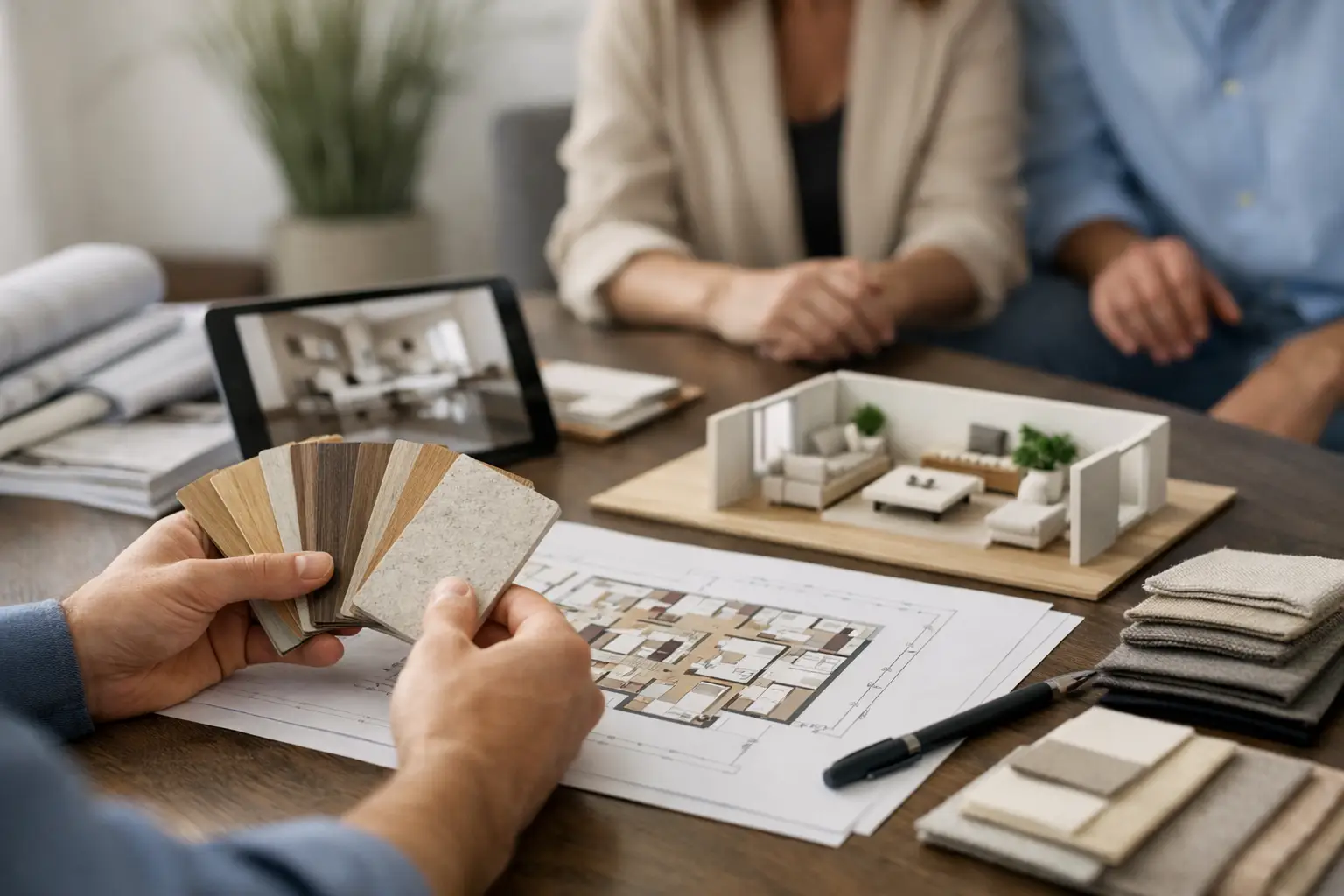
Material selection is strongest when it is connected to space planning, lighting, joinery, and execution from the start. Rather than making choices from individual catalogs, work with a design and fit-out team that can assess samples in context, confirm technical suitability, and manage the details through installation.
At Al Sahm Decoration Design, material recommendations are developed around each client’s operational needs, design vision, and project conditions. Whether the goal is a productive office, an elevated restaurant, a distinctive retail setting, or a comfortable home, the final palette should feel intentional, durable, and unmistakably suited to the people who use it.
The right materials do not just finish a space. They support the way it works, protect the investment behind it, and help every visitor, customer, employee, or resident experience the quality of the environment from the first step inside.