
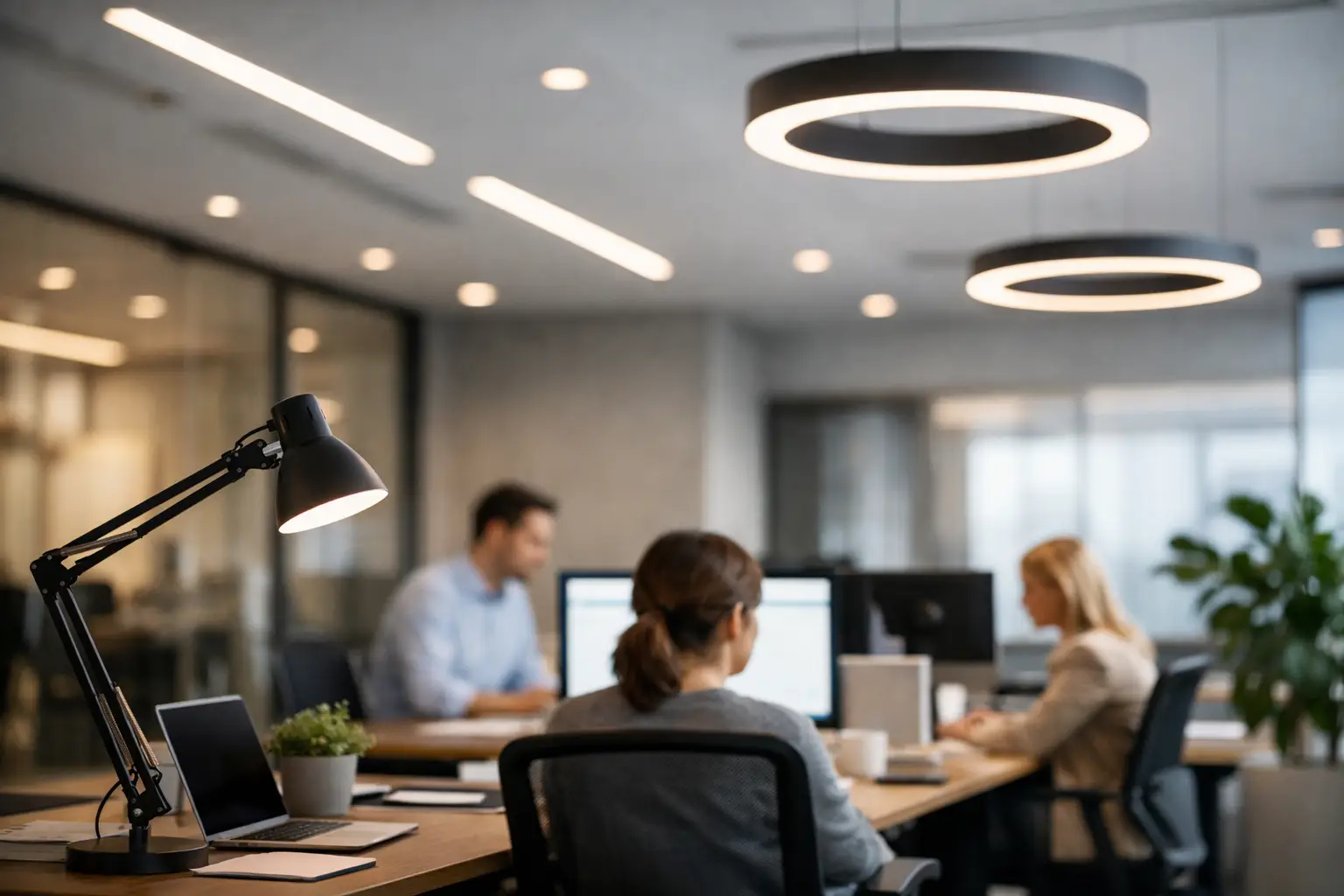
A well-designed office can fail in one quiet but costly way – the lighting looks acceptable, yet people feel tired by midafternoon, screens cause eye strain, and focused work takes more effort than it should. That is why office lighting design for productivity deserves the same attention as layout, acoustics, and furniture selection. Lighting directly affects concentration, mood, visual comfort, and how a workspace performs throughout the day.
For business owners and office decision-makers, this is not only a design choice. It is an operational decision. The right lighting supports staff performance, presents the business professionally, and helps each zone of the office function as intended. The wrong approach often creates glare, uneven brightness, dull meeting rooms, and workstations that never feel fully comfortable.
Why office lighting design for productivity matters
Most productivity problems tied to lighting are subtle at first. Employees may not say, “the lighting is the issue.” Instead, they mention fatigue, headaches, screen reflections, lack of focus, or a space that feels flat and uninspiring. Over time, these issues affect comfort and daily efficiency.
Good office lighting design for productivity balances human needs with the practical demands of the workspace. People need enough light to work accurately, but they also need visual ease. A bright office is not automatically a productive office. If lighting is too harsh, too cool, or poorly placed, it can become a distraction rather than a support.
This is especially relevant in modern offices where teams move between focused desk work, meetings, collaboration, and private calls. One lighting approach cannot serve every function equally well. A productive office uses light intentionally, according to how each space is used.
Start with the task, not the fixture
A common mistake in office fit-out projects is choosing decorative fixtures too early. Visual appeal matters, especially in reception areas and client-facing spaces, but productivity begins with purpose. The first question should be simple: what happens in this area, and what level of visual clarity does it require?
Open-plan workstations need even, controlled light that minimizes glare on monitors. Meeting rooms need lighting that supports both discussion and screen presentations. Executive offices often benefit from a more layered arrangement that feels polished without compromising function. Breakout areas can be softer and more relaxed, but they still need enough illumination to feel safe and usable.
When lighting is planned around tasks, the result is more precise and more comfortable. It also avoids over-lighting spaces that do not need high intensity, which can make an office feel clinical.
Natural light should lead the strategy
Daylight is one of the strongest assets in any office interior. It improves the feel of the space, reduces dependence on artificial lighting during the day, and supports a more comfortable working environment. In Dubai and across the UAE, however, natural light must be managed carefully. Strong sunlight can create heat, glare, and contrast problems if not controlled properly.
This is where design judgment matters. Large windows are valuable, but workstations should not be placed in positions where direct sun hits screens or employees’ eyes. Glass partitions can help distribute light deeper into the office, but they should be coordinated with shading, blinds, or film where needed. The goal is not simply to let in more daylight. It is to make daylight usable.
A productive lighting scheme works with the architecture of the space. It considers window orientation, peak brightness hours, reflective surfaces, and how daylight changes across the day. That kind of planning creates a more stable environment for staff and a more refined look for the office overall.
Layered lighting creates better performance
The most effective offices rarely rely on a single blanket of ceiling lights. They use layers. This approach gives the space more flexibility and delivers better visual comfort.
Ambient lighting provides the general base level of illumination. Task lighting adds focused support where detailed work happens. Accent lighting helps define key features such as reception desks, brand walls, executive shelving, or architectural details. Together, these layers make the office feel intentional rather than flat.
Layering also helps solve a common tension in office design: one person wants a brighter workspace, another wants less intensity. With the right mix of general and localized lighting, the office can serve different preferences without compromising the overall design.
Color temperature affects focus and mood
Light has character, not just brightness. Color temperature influences how a space feels and how people respond to it. Cooler light often feels sharper and more energizing, while warmer light feels calmer and more hospitality-driven.
In most office environments, a neutral to slightly cool white tends to work well for focused tasks. It supports alertness and visual clarity without feeling too stark. But there is no universal setting that suits every area. A reception lounge, for example, may benefit from warmer tones that feel welcoming and premium. A boardroom may need lighting that flatters faces while still supporting presentations and note-taking.
This is where a tailored design approach makes a clear difference. The lighting should align with the function of the zone, the materials used in the interior, and the brand image the business wants to present. A law office, creative agency, clinic, and co-working space may all need different lighting moods, even if they occupy similar square footage.
Glare control is one of the biggest productivity factors
If employees are squinting at screens, adjusting monitor angles, or avoiding certain desks at certain times of day, glare is likely part of the problem. It is one of the most overlooked issues in office lighting design because the space may still appear bright enough. But brightness and comfort are not the same thing.
Glare often comes from poorly positioned fixtures, shiny finishes, uncontrolled daylight, or lighting aimed directly into the visual field. It reduces screen visibility and increases eye fatigue. In open offices, it can also create uneven working conditions where some desks feel comfortable and others do not.
Reducing glare involves coordination between lighting layout, ceiling design, workstation orientation, glazing, and material selection. Matte finishes, diffused fixtures, and thoughtful desk positioning can significantly improve comfort. This is a technical issue, but it has a direct human outcome: people can work longer with less strain.
Smart controls add flexibility
A productive office does not always need the same lighting level from morning to evening. Different teams, seasons, and activities call for adjustment. Smart controls allow lighting to respond more efficiently to how the space is actually used.
Dimming systems, occupancy sensors, and zoned controls can improve both comfort and energy performance. Meeting rooms can shift from discussion mode to presentation mode. Private offices can be adjusted based on personal preference. Underused areas do not need to stay fully lit all day.
That said, technology should support the user, not complicate the experience. Overly complex control systems often frustrate teams and end up being ignored. The best solution is practical, intuitive, and suited to the scale of the business.
Lighting should support brand image too
Productivity is the priority, but office lighting also shapes perception. Clients, investors, and employees form immediate impressions from the atmosphere of a space. Lighting influences whether the office feels premium, energetic, calm, innovative, or dated.
This matters in reception areas, conference rooms, executive suites, and any part of the workplace that reflects the company brand. Clean lines, balanced brightness, and high-quality fixtures communicate professionalism. Poor lighting, even in a beautifully furnished office, can make the environment feel unfinished.
For this reason, lighting design should never be treated as a last-minute technical add-on. It is part of the overall interior strategy. At Al Sahm Decoration Design, this is where integrated planning becomes especially valuable – lighting, layout, materials, partitions, and furniture should work together from the beginning.
What businesses should evaluate before a lighting upgrade
Before changing fixtures or approving a fit-out plan, it helps to assess how the office currently performs. Are there dark zones or overlit areas? Do employees rely heavily on desk lamps? Are there frequent complaints about headaches, fatigue, or meeting rooms that feel uncomfortable? Does the office look consistent from one zone to another?
It is also worth considering future use. An office designed only for today’s team structure may need revisions soon if departments grow, hybrid work changes occupancy patterns, or spaces become more multi-purpose. Lighting should be flexible enough to support those shifts.
A professionally planned solution takes these questions into account early. That saves time during execution and helps avoid corrections after move-in, when changes become more disruptive and expensive.
Office lighting works best when it feels almost invisible – not because it lacks impact, but because it supports every task, every interaction, and every part of the workday without drawing attention to its flaws. When the lighting is right, people focus better, the office feels more refined, and the entire environment works harder for the business.