
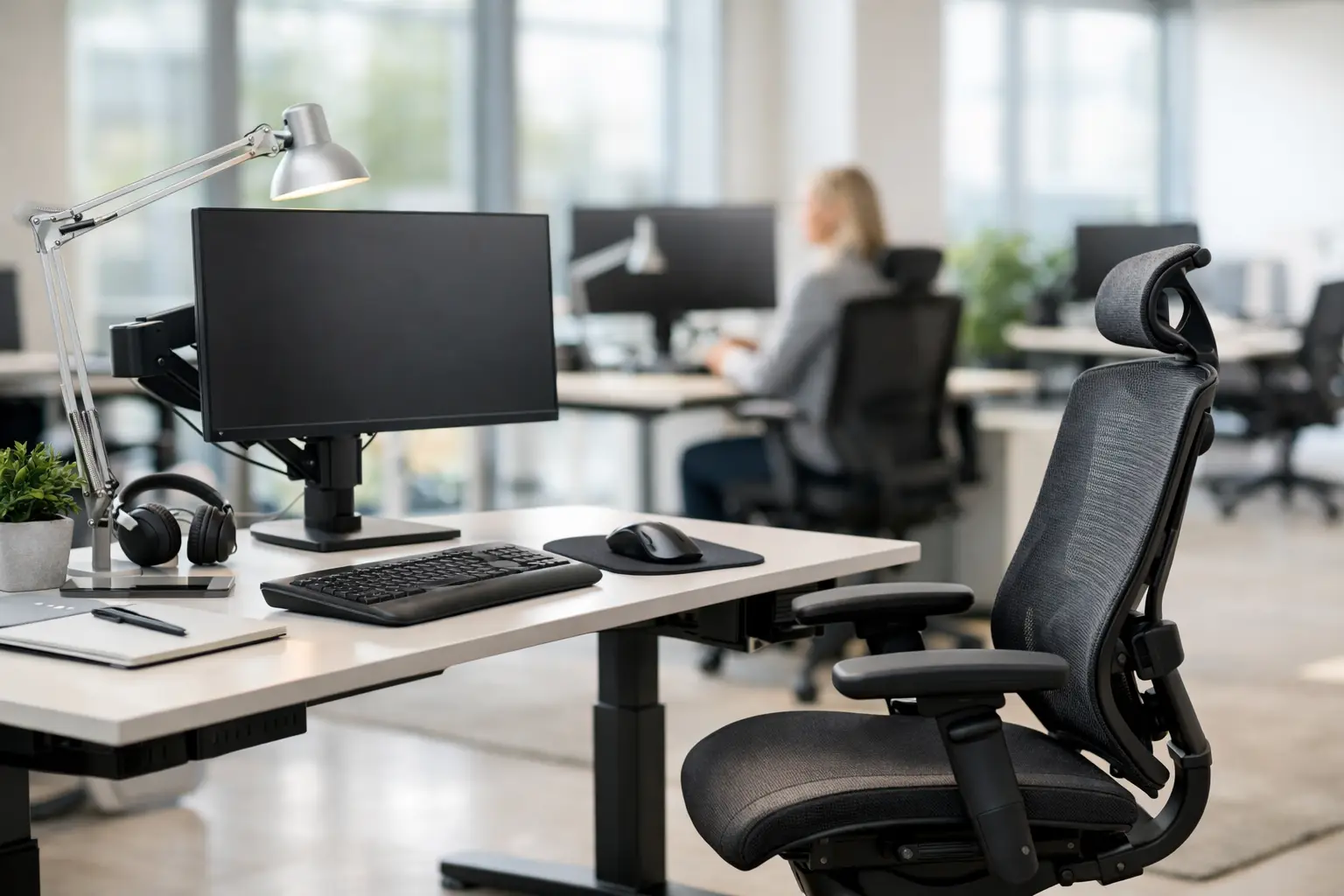
A workstation can look premium in a presentation and still create daily frustration for the people using it. Desks that are too high, chairs with limited adjustment, poorly positioned monitors, and crowded circulation areas all affect comfort, concentration, and the way a business operates. Knowing how to select ergonomic workstations helps office leaders create a workplace that supports employees while presenting a more professional, considered business environment.
For offices, retail headquarters, studios, and commercial teams, ergonomics should not be treated as a furniture checklist. It is a space-planning decision that connects employee well-being, productivity, technology needs, visual identity, and long-term operational value.
Start With the Work, Not the Furniture
The right ergonomic workstation depends on what employees do during the day. A finance team working across two screens needs a different setup from a design team reviewing large drawings, a receptionist meeting visitors, or a sales team moving between calls and collaborative sessions.
Before selecting desks and chairs, assess the tasks performed in each zone. Consider how much time people spend seated, whether they use laptops or desktop monitors, how often they need to access files or printers, and whether their work requires privacy, teamwork, or frequent movement. This practical review prevents the common mistake of installing one standard desk solution across every department.
It also helps define the right workstation mix. Some offices benefit from primarily fixed desk positions, while others need height-adjustable desks, shared touchdown areas, private focus stations, or larger project tables. The best solution is rarely the most expensive option in every location. It is the one that matches the actual working pattern of the team.
How to Select Ergonomic Workstations That Fit People
People vary in height, proportions, preferred working posture, and physical needs. A fixed workstation designed around an average user may be acceptable for occasional use, but it can become uncomfortable when employees spend six to eight hours at the same desk.
Adjustability is the strongest foundation of an ergonomic setup. A good task chair should allow users to adjust seat height, back support, armrests, recline tension, and seat depth where possible. Lumbar support should align with the natural curve of the lower back rather than sitting too high or too low. The seat should support the thighs without pressing into the back of the knees.
Desk height matters just as much. When seated, users should be able to keep their feet supported, shoulders relaxed, and elbows close to a 90-degree angle while typing. If a desk cannot be adjusted, chair height and footrests may help, but this is a compromise. For teams with varied body types or extended computer work, height-adjustable desks provide more flexibility and encourage healthy changes in posture throughout the day.
Standing desks are not automatically the right answer for every office. They add value when employees are given enough space, cable flexibility, and guidance to alternate between sitting and standing. A desk used only in the standing position can create its own discomfort. The goal is movement and choice, not one prescribed posture.
Choose Chairs for Performance, Not Just Appearance
Executive chairs often make a visual statement, but a refined appearance should not come at the expense of support. A chair that is oversized, heavily padded, or limited in adjustment may look impressive in a boardroom yet be unsuitable for intensive desk work.
For daily workstations, select commercial-grade task seating with durable mechanisms and breathable, easy-to-maintain upholstery. Mesh backs can improve airflow in warm office environments, while upholstered chairs may better suit executive rooms and client-facing spaces. The right material depends on the design direction, maintenance requirements, and expected level of use.
Test chairs whenever possible. Sit in them for more than a minute, adjust the settings, and check whether they support a neutral posture without forcing the user forward or backward. In a fit-out project, sample testing before a full order can prevent expensive corrections later.
Plan Monitor, Keyboard, and Laptop Positioning
A thoughtfully selected desk can still fail ergonomically if screens and accessories are placed incorrectly. The top portion of a monitor should generally sit at or slightly below eye level, with the screen positioned at a comfortable viewing distance. Users should not need to lean forward, crane their necks, or turn constantly to read information.
Monitor arms are particularly valuable in offices where teams use dual screens, share desks, or need to clear desk space for meetings. They allow better screen positioning and create a cleaner visual finish by reducing cable clutter. However, the desk must be strong enough to support the arm system, and the installation should account for partitions, power access, and movement clearance.
Laptop users need special attention. A laptop screen and keyboard are connected, so placing the screen at eye level makes the keyboard too high for comfortable typing. For regular laptop work, provide a laptop stand together with an external keyboard and mouse. This small addition can make a meaningful difference in comfort and focus.
Keyboard trays can work in tightly planned offices, but they are not always necessary. A sufficiently deep desk with the correct height often provides a more streamlined solution. The key is to leave enough room for the keyboard, mouse, documents, and forearm support without forcing users into an awkward reach.
Give Each Workstation Enough Space
Ergonomics is not limited to what sits at the desk. It also includes the ability to move comfortably around it. A workstation that looks efficient on a floor plan may feel restrictive if chairs collide, storage blocks access, or employees cannot pass behind seated colleagues.
Allow room for users to pull back chairs, enter and exit their work area, and access drawers or cabinets without disrupting adjacent desks. Shared pathways should remain clear, especially near printers, meeting rooms, pantry areas, and emergency routes. In compact offices, careful planning is more effective than simply reducing desk size.
Desk depth is another overlooked factor. Shallow desks make it difficult to position monitors at a proper distance and leave little room for active work. Deep work surfaces are especially useful for teams handling papers, samples, large screens, or multiple devices. Where space is limited, monitor arms and integrated storage can help preserve usable surface area.
Build Privacy Without Isolating the Team
Open-plan offices support visibility and collaboration, but they can also increase visual distraction and noise. Low desk screens, acoustic panels, and strategically placed storage can create a greater sense of personal territory without closing the office off completely.
The right level of separation depends on the role. Customer service teams may need easy communication, while accounting, HR, legal, and management functions often benefit from more visual and acoustic privacy. Ergonomic planning should consider mental comfort as well as physical posture.
Coordinate Lighting, Acoustics, and Climate
A workstation cannot perform well under harsh glare, constant noise, or poor air circulation. These conditions can cause eye strain, fatigue, and reduced concentration even when the desk and chair are well specified.
Position screens perpendicular to windows where possible, rather than directly in front of or behind them. This reduces glare and reflection. Adjustable blinds, layered lighting, and well-positioned task lights can improve visual comfort without compromising the overall interior concept.
Acoustic treatment is equally valuable in busy offices. Soft flooring, acoustic ceiling features, upholstered seating, wall panels, and glass partition systems with the right specifications can help manage sound. Glass partitions preserve openness and natural light, but they should be balanced with materials that absorb noise rather than reflect it throughout the workspace.
In warm climates, workstation layout should also account for air-conditioning vents. Direct airflow toward a desk can be distracting and uncomfortable over a full workday. A professional space plan considers these building conditions before furniture is finalized.
Select Materials That Support Long-Term Use
Office workstations should withstand daily cleaning, repeated movement, cable management needs, and changing technology. Premium finishes are valuable when they are selected with maintenance and durability in mind.
For desk surfaces, consider scratch resistance, edge quality, stain resistance, and the ease of cleaning. Matte finishes often reduce visible fingerprints and screen reflections, while overly glossy surfaces may create glare. Cable access should be integrated from the start through grommets, concealed trays, floor boxes, or power modules that keep wires organized and safe.
Storage should be close enough to support workflow but not so dominant that it makes the workstation feel confined. Mobile pedestals offer flexibility for assigned desks, while centralized storage may suit shared-work environments. The choice depends on document use, security needs, and the degree of desk sharing within the business.
Work With a Fit-Out Partner Early
Selecting ergonomic furniture after the layout, electrical points, partitions, and lighting are already fixed often limits the available options. When ergonomics is integrated early, the workplace can be planned around circulation, power, daylight, team structure, and brand presentation from the beginning.
A professional office fit-out partner can review workstation requirements alongside finishes, meeting areas, executive spaces, reception design, storage, and technology infrastructure. This creates a more cohesive result than choosing furniture in isolation. It also reduces the risk of mismatched dimensions, inadequate power access, or last-minute changes that affect budget and project timelines.
Al Sahm Decoration Design approaches office interiors as complete working environments, combining tailored space planning, quality workmanship, and practical execution for businesses that expect more from their workplace.
An ergonomic workstation should feel almost unnoticed by the person using it. When the chair supports the body, the screen sits naturally in view, the desk accommodates the work, and the surrounding space allows people to move and focus, the office becomes a stronger daily asset for both employees and the business.


