A Dubai villa should feel impressive at the entrance, but it must also work effortlessly on an ordinary weekday morning. That balance is what makes villa interior design Dubai different from decorating a smaller apartment or following a trend from a catalog. Large rooms, multiple family members, entertaining areas, intense sunlight, and a desire for premium finishes all require a design strategy that is as practical as it is elegant.
For villa owners, the objective is not simply to fill rooms with expensive furniture. It is to create a home that reflects the family’s lifestyle, supports daily routines, and retains its quality over time. The strongest results come from early planning, material choices suited to the UAE climate, and professional execution that keeps every detail aligned.
Start Villa Interior Design Dubai With How You Live
Every successful villa project begins with a clear understanding of the people who will use it. A formal majlis may be central to one household, while another family may need an open living area that accommodates children, casual dining, and frequent guests. Some owners want a statement staircase and double-height reception space; others place greater value on a quiet home office, a cinema room, or organized storage.
Before selecting finishes or finalizing a color palette, define how each area should perform. Consider where the family gathers most often, whether staff circulation needs to remain discreet, how guests enter and move through the villa, and which spaces need privacy. These decisions influence the layout, lighting, joinery, and furnishing plan from the start.
A well-planned villa also separates public and private zones naturally. Reception areas can feel polished and welcoming without exposing bedrooms or family lounges. This is particularly valuable in homes where entertaining is frequent. Thoughtful circulation allows the property to feel open while protecting comfort and privacy.
Build the Layout Before Choosing the Look
A villa has more square footage than most homes, but space can still be used poorly. Oversized rooms without defined functions often feel cold rather than luxurious. The right space plan creates proportion, flow, and purpose in every room.
In a large living room, for example, several seating zones may be more effective than one oversized arrangement. A formal conversation area, a relaxed television corner, and a reading space can coexist when they are connected by a consistent design language. Area rugs, lighting placement, custom furniture, and ceiling details help establish each zone without closing the room off.
Open-plan layouts can create a modern, airy atmosphere, but they are not the right choice for every villa. An open kitchen may suit a family that enjoys casual gatherings, while a closed or partially screened kitchen may better serve homeowners who prefer separation during entertaining. The best solution depends on lifestyle, cooking habits, ventilation requirements, and the existing architectural structure.
Storage deserves the same attention as visible finishes. Custom wardrobes, under-stair cabinets, concealed utility storage, and tailored media units prevent clutter from undermining an otherwise refined interior. In premium homes, organization is part of the design, not an afterthought.
Choose Materials That Suit Dubai Living
Materials need to look exceptional, but they must also perform well in local conditions. Dubai’s strong sunlight, airborne dust, high temperatures, and air-conditioned interiors can affect the long-term appearance of fabrics, flooring, wood finishes, and hardware.
Natural stone, porcelain, engineered surfaces, quality timber veneers, and durable metal finishes are popular because they offer a balance of visual impact and performance. In high-traffic family areas, practical flooring with a matte or lightly textured finish can be a better choice than highly polished materials that show marks easily. In kitchens and bathrooms, moisture resistance, maintenance needs, and slip resistance should be considered alongside appearance.
Window treatments are equally important. Sheer curtains soften daylight and add warmth, while blackout layers provide privacy and comfort in bedrooms. Where sun exposure is intense, appropriate fabrics and shading systems help protect furniture, artwork, and flooring from fading.
There is always a trade-off between delicate finishes and easy maintenance. A pale upholstered sofa may create a serene look, but a family with young children or pets may benefit from performance fabric in a similar tone. A professional designer can preserve the intended aesthetic while selecting materials that match real life.
Lighting Should Change With the Time of Day
Lighting is often what separates an attractive villa from a genuinely inviting one. Relying on a single central fixture can leave large rooms flat and uncomfortable. A layered lighting plan combines ambient lighting for overall illumination, task lighting for practical activities, and accent lighting for architectural details, art, textured walls, or display shelves.
During the day, natural light should be welcomed and controlled rather than ignored. In the evening, warm lighting creates a more relaxed residential atmosphere in lounges, bedrooms, and dining areas. Kitchens, dressing rooms, study spaces, and vanity areas may require brighter, more focused light. Dimming controls allow one room to support different occasions, from a family dinner to a formal gathering.
Statement chandeliers can add character to entrance halls and dining spaces, but they should be scaled to ceiling height and furniture placement. A dramatic fixture that is too small can disappear, while one that is too large can overwhelm the architecture.
Create a Cohesive Style Without Making Every Room Identical
A villa should have a recognizable identity from room to room, yet every space does not need the same furniture, wall treatment, or color. Cohesion comes from repeated elements such as a refined neutral base, complementary timber tones, consistent metal finishes, or a shared approach to lighting and detailing.
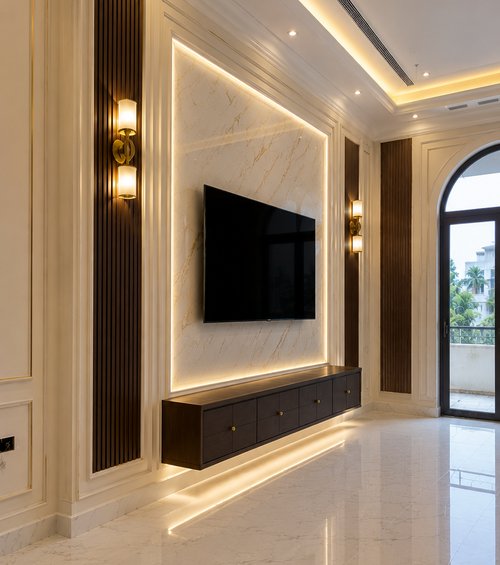
Contemporary villa interiors in Dubai often pair clean architectural lines with warm materials, soft textures, and selective statement pieces. This can include fluted wood panels, stone feature walls, custom joinery, sculptural lighting, and carefully selected artwork. The result feels current without becoming overly temporary or trend-driven.
For clients who prefer a more classic direction, symmetry, layered textiles, detailed wall moldings, and elegant stone can create a formal atmosphere. The key is restraint. Too many competing patterns, finishes, or decorative elements can make even a large villa feel visually crowded.
Personalization is what gives the property lasting character. A family’s art collection, cultural influences, travel memories, favorite colors, and entertaining style should guide the final details. Custom design is most valuable when it makes the home feel distinctly owned rather than copied.
Why Design and Execution Must Work Together
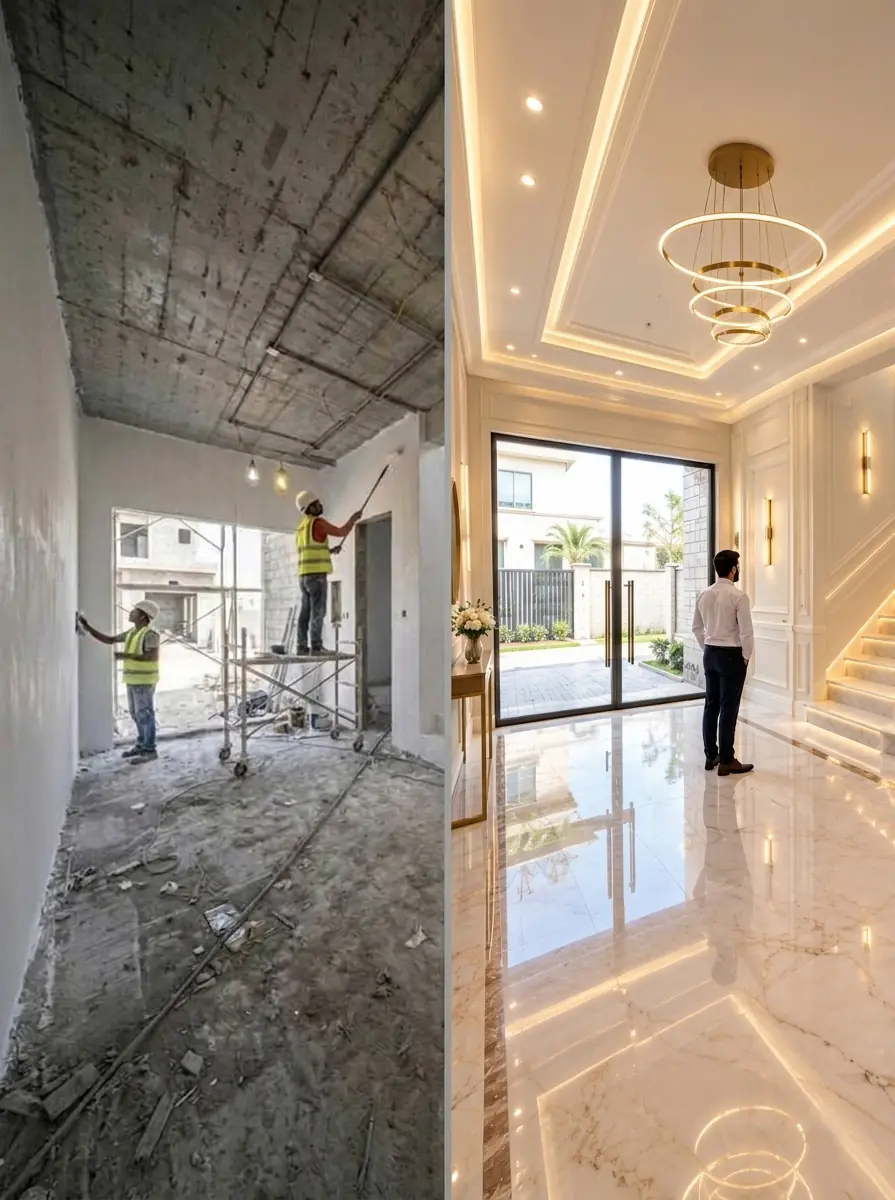
A villa interior project involves more than a concept board. It requires accurate site measurements, technical drawings, contractor coordination, material approvals, joinery production, electrical planning, ceiling work, flooring installation, painting, and final styling. When these stages are handled separately without clear coordination, delays and inconsistent finishes can follow.
Working with a design-and-execution partner gives homeowners a clearer path from initial consultation to completion. At Al Sahm Decoration Design, the process can include space planning, customized design direction, material selection, fit-out coordination, and quality-focused finishing under one project approach.
This is especially relevant when structural adjustments, custom carpentry, glass partitions, lighting changes, or kitchen and bathroom upgrades are involved. A beautiful rendering is only valuable if it can be delivered accurately on site. Detailed planning protects the design intent and helps manage budget decisions before work begins.
Plan the Budget Around Long-Term Priorities
A realistic budget does not mean compromising on quality everywhere. It means investing in the elements that affect comfort, durability, and daily use. High-quality joinery, reliable hardware, well-designed lighting, practical flooring, and carefully specified wet-area finishes typically provide better long-term value than decorative items chosen only for immediate visual impact.
It is wise to leave room in the budget for site conditions and client changes, particularly in renovation projects. Existing villas may reveal electrical, plumbing, waterproofing, or leveling requirements once work starts. Early site assessment reduces surprises, but a contingency remains sensible.
The best villa interiors are not defined by excess. They are defined by confident decisions, durable craftsmanship, and spaces that feel as comfortable on a quiet evening as they do when the home is full of guests. Begin with a clear conversation about how you want to live, then let every design decision support that vision.